
Bloody tourists.
You can’t abide living with them, but you can’t survive without them.
That’s the dilemma facing numerous Caribbean islands, and some in the Med, whenever the next floating behemoth draws nigh and disgorges its cargo of oiled-up, pink-fleshed American grampuses with shirts louder than their voices, or shaven-headed, tattoo-covered tanked-up Brits.
Not that long ago, English domestic cricket was in a similar position of relying on income from tourists, with may county clubs facing the prospect of going belly up without the tourist pound.
Before TV rights brought the moolah flooding in, English domestic cricket was funded via an annual grant from the ECB, and income from tourists.
With the ECB controlling the doling out of the annual grant, like the Fugger bankers of medieval northern Europe, it was often the tourist income which kept the wolf from the door.
These tourists would have been touting cricket coffins and whites, not preppy Vineyard Vines polo shirts and Birkenstocks. They arrived regularly in spring heralded like the swallows to Capistrano and they had county club treasurers rubbing their hands like Scrooge over Jacob Marley’s demise.
County cricket clubs lived a precarious position, and the income from tourists could mean the difference between life and death. Hampshire were just 12 days away from going out of existence until current president Rod Bransgrove waded in and saved them.
Back then, tourists pitched up in May and spent four months on these shores. The main object was always the Test series – usually five – but between each Test, they would play pretty much every county team, and as a tour, it served many purposes.
The tour would kick off with the traditional opening fixture against the Duke of Norfolk’s XI at Arundel, (or once he had popped his clogs, the Duchess of Norfolk’s XI).
The team selected by the Duke (or probably by a footman when the Duchess had to pick it) was supposed to provide the touring team with a gentle introduction to the English season and a first soupcon of English conditions.
After this opening fixture, the tourists were off and running on a five-month caravanserai of the boonies.
As far as counties were concerned a four-day match against the tourists provided the opportunity to fill financial coffers which until then had served as social housing for moths and woodlice.
Of course. there were tourists and tourists.
Top of the order were the Australians. They guaranteed full houses for all four days of the game, with the increased ticket sales accompanied by a boost in sales of food and drink. The icing on the cake, though, was the prospect of selling the lucrative corporate hospitality,
FSOM recalls Hampshire’s marketing manager Mike Taylor easing into the hallowed halls of the County Ground press box with an ear-to-ear grin, having sold all four days’ worth of tables to allow guffawing accounts managers and sales reps who knew nothing about cricket to get bladdered.
Next on the list were the West Indies, who always packed the ground and could bring in a fair wedge of corporate hospitality, and the South Africans, when they appeared on the scene.
India and Pakistan would always fill the bleachers with their local support but provided zip in terms of corporate hostility.
Last on the list were New Zealand. Nice enough but with little in the way of star quality players and who left the corporate hospitality tents with tumbleweed blowing through them.
Tours provided local yokels with the chance to see the stars of the game, although most of them plied their trade in county cricket.
Hampshire supporters could see Andy Roberts, Malcolm Marshall and Gordon Greenidge try to do their county team-mates down, and Matthew Hayden and Shane Warne thumb their noses at guys they otherwise shared a dressing room with.
But while a five-month long tour might have been a bit of a slog, it provided any touring team with scope to play themselves into form and get used to capricious English conditions.
They would have played three county teams before the first test. Both tourists and counties took these game seriously; the counties for kudos and prestige, the tourists to get a good look at all the playing group. Thus it was that the tourists, allowing for squad rotation, always put out a strong team.
Serious touring teams – and the Baggy Greens are always that! – used the county matches for their own purposes, to hone their skills, refine their squad and get up to speed.
Once upon a time, England did the same. Come the end of the domestic season and the first leaves turning brown, they would pack sufficient provisions and manpower as if they were off the re-conquer the Empire.
If it was an Ashes tour they would play the state sides and some powerful representative teams, all determined to thrash the Poms at some place beyond the Black Stump like Oodnadatta or Bushman’s Knob.
Five months was a slog no doubt, but those days are gone. The current Ashes test has been squeezed tighter than Rachel Riley into a Countdown dress with little time between Tests for practice of technique, ruthlessly exposed by the Aussies.
Cricket’s ruling bodies’ relentless search for the wonga-earning shorter form of the game means a packed calendar where Test series compete for space with the IPL, the Big Bash League and the T20 and The Hundred. This is done with the connivance of players, who can’t wait to dive off and play in franchise cricket.
Longer tours might have been a bit of a ball-ache and created their own strains and the gaps between Tests provided scope for japes and larks, none more so than in 1991 when David Gower and John Morris decided to brighten up the match against Queensland by hiring two bi-planes and buzzing the match in which Robin Smith was about to score a century like Baron von Richthofen strafing a trench.
They thought it was a laugh but po-faced captain Graham Gooch didn’t. They were each fined £1,000. Morris never played for England again and it worsened Gower’s relationship with Gooch to the point where his Test career went downhill faster than Franz Klammer.
So, what the hell is going on Down Under at the moment?
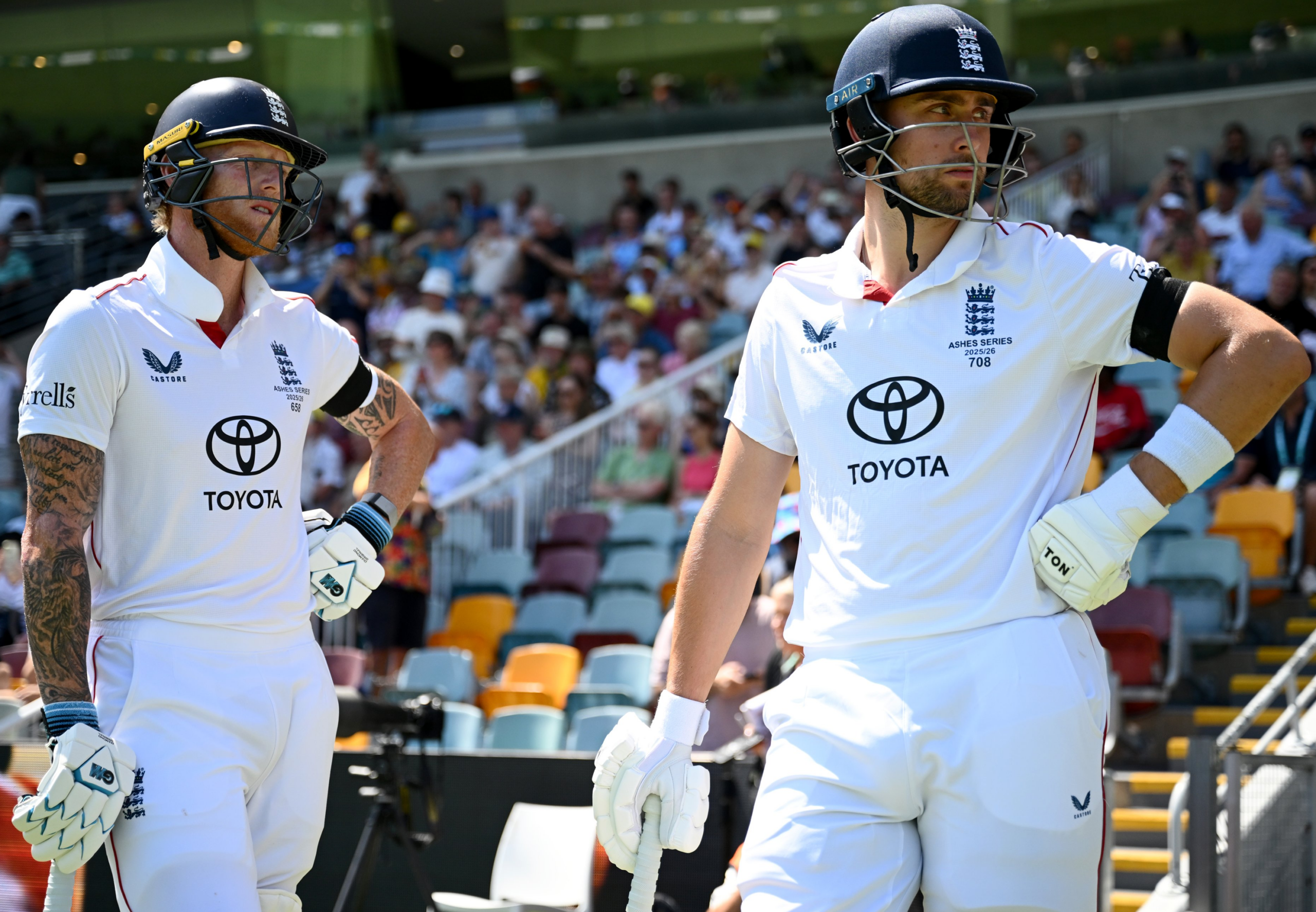
England landed in Australia with very little time before the first Test. There was no series of warm-up games against state sides to play themselves in and the accusations of arrogance in thinking the ability of those English players chosen to hit the ground running and implement the attacking cricket ethos of Bazball was ruthlessly exposed inside a two-day defeat in Perth.
Shorter tours mean things come at you faster than an angry emu, and there is less time to put things right, especially in Australia where any weakness is likely to be ruthlessly exploited. Having been larruped inside two days, England had a few lessons and hard truths to digest and little time and scope to put things right, especially with the second Test a day-nighter with a pink ball.
England were offered the chance of a warm-up match but turned it down on the basis the players needed a break from cricket! They were given a day on a golf course, with only Joe Root deciding to spend time facing a pink ball in the nets.
The result, of course, was an equally dismal and depressing defeat in the second Test, with coach Brendon McCallum qualifying for a comedy award with his post-match comment that he thought England had over-prepared for the game!
Failing to prepare properly for an Ashes tour is tantamount to act of criminal neglect and if there is anywhere in the world that knows the outcomes of criminal acts, it is Australia.
Back then it was called Transportation and there was no tour longer than that.
Share this:
- Share on Bluesky (Opens in new window) Bluesky
- Email a link to a friend (Opens in new window) Email
- Share on Facebook (Opens in new window) Facebook
- Share on Reddit (Opens in new window) Reddit
- Share on Threads (Opens in new window) Threads
- Share on WhatsApp (Opens in new window) WhatsApp
- Share on X (Opens in new window) X
Related

Must See
-


Features
/ 2 months agoEXCLUSIVE INTERVIEW: Marc White on Dorking Wanderers’ rise from park football to global screens and their future aspirations
Dorking Wanderers, a National League South side with international recognition, are taking the social...
By Jameel Mulla -


Boxing
/ 2 months agoTop five sporting events of 2025: From Rory McIlroy finally winning the Masters, to England Women’s Rugby World Cup triumph and more
It’s been another remarkable 12 months of sport that has provided plenty of entertainment...
By Ben Potts -


50 Shades of May
/ 4 months agoFSOM: Grassroots football is dying on its a*** and we should be very concerned – here’s why I give the recreational game 10-15 years max
Sometimes when you poke a dead horse with a pointy stick a miracle occurs...
By John May


