
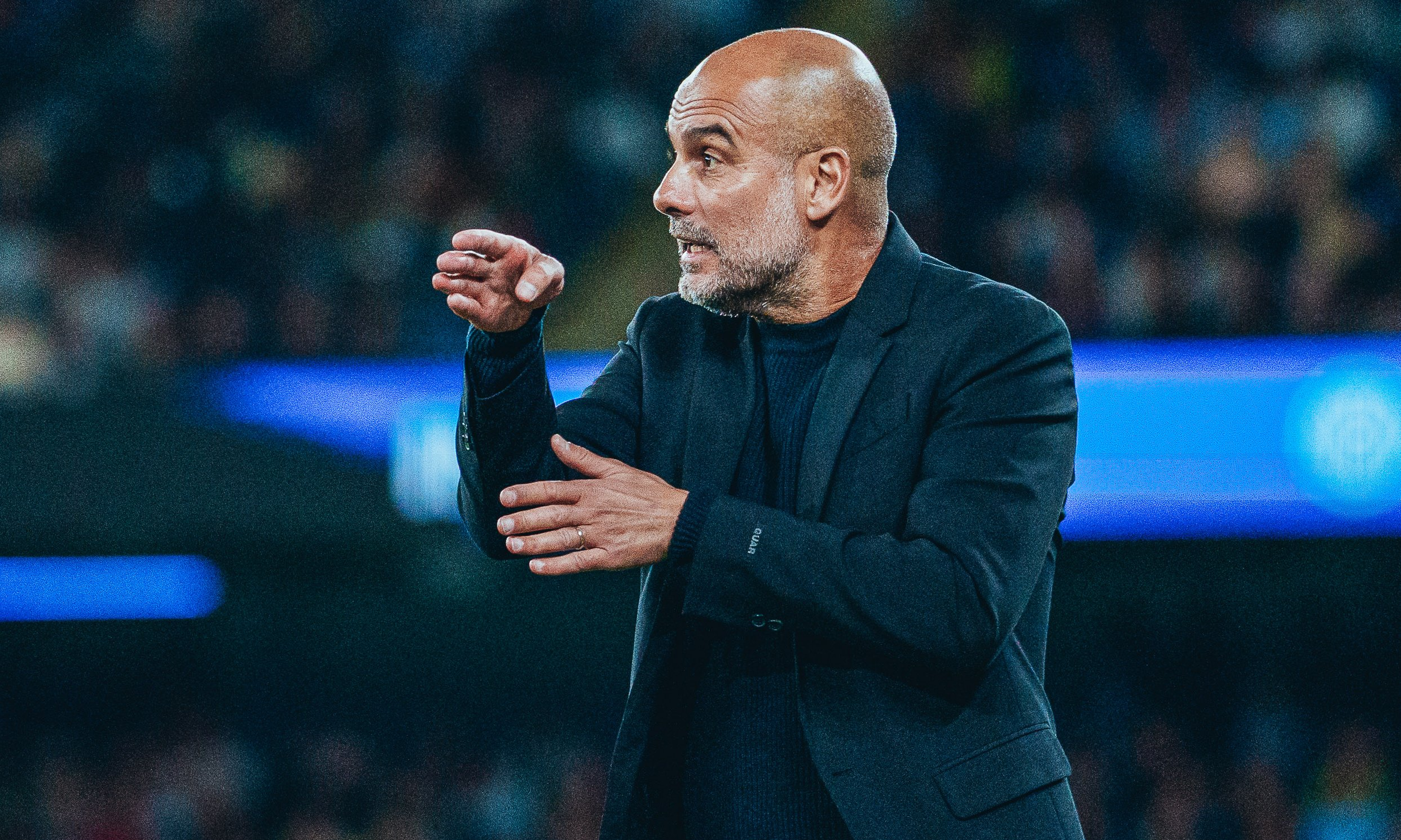
You wouldn’t necessarily associate Pep Guardiola with Bulmer’s fruit bat.
But like the Manchester City supremo, they are both endangered species.
Guardiola is one of just five ‘unicorn’ managers in the Premier League. Arsenal, Everton, Crystal Palace and Leeds United are the other four who employ what football fans would see as a traditional manager.
Time was, great managers bestrode the game and chiselled their names into it. They created their teams in their image, and they did this by running everything at their club from soup to nuts.
Brian Clough, Bill Shankly, Bobby Robson, Sir Alex Ferguson were all giants of the game who ruled their clubs with the authoritarianism of a Hapsburg emperor.
Even lower down the scale, John King at Tranmere Rovers and John Rudge at Port Vale were examples of managers who kept their clubs above water, even if it was a smallish pool.
Managers were able to do this because of the way football clubs operated.
Football clubs at the heart of their communities
Clubs were born, raised and lived in a community and as such were run by people in it and from it. Football club directors tended to be local businessmen, who had made a bit o’brass and for motives ranging from public spirit to a bit of prestige, got involved with their local football club. It was the butcher, the baker and the candlestick maker.
The most famous butcher would have been Louis Edwards, who became Manchester United chairman from 1965. So successful was he at making a toothsome banger and carving up a decent beef joint and half leg of lamb, he became United’s biggest shareholder and oversaw one of their golden periods.
Across the City, Peter Swales made his bunce in TV shops when the goggle box took off in the 60s and at Leeds, Manny Cussins’ furniture empire bankrolled their success under Don Revie. The Mears family made their pile in property and owned Chelsea for more than half a century.
Not all football clubs had wealthy men at the helm. Southampton’s board consisted of a solicitor as chairman, Alan Woodford, Ian Balding a hugely successful racehorse trainer, Keith Wiseman the local coroner and at one time George Reader who refereed the 1950 World Cup final, was also chairman..
Like most football club boards, none of them had fortunes to bung into the club, but as successful local business men they knew how to run a tight ship. They carefully counted the money which came through the turnstiles and was most clubs chief source of income and made sure there was enough when the manager required a player two.
You get the picture. Football clubs were largely run by local worthies who loved football, but whose knowledge – with a few exceptions – of the game on the pitch ran to the extent you could fill a dormouse’s nightcap.
How football clubs used to be run
They needed somebody to be able to run things at the sharp end, on the pitch, hence they appointed a manager. And so the structure of football clubs was simple. The board of directors raised the money and ensured the club was kept afloat, and the manager ran everything else, and ne’re did the two sides meet.
It was a scenario ripe for men with vast football knowledge and equipped with powerful egos and chutzpah to forge their way in the footballing world.
Apart from the monthly board meetings, managers would have few dealings with the board. Brian Clough treated his Nottingham Forest board with the sort of disdain Naomi Campbell would display if er well-shod feet stepped in a coil a dog had left behind.
The manager ran the whole train set. Not only did he pick the 11 players to trot out on to the pitch on a Saturday, he went and found them. He would employ trusted scouts, gnarled and wise old former pros who donned flat caps and turned their coat collars up to dragnet the lower reaches of the leagues to spot talent.
Based on their recommendations, the manager would go and cast his own eye over the player, and if the player met with his approval, a request from the manager would go into the board for the funds to sign the player, either a polite note on freckle-edged notepaper, or via a thumping Iberico ham sized fist on the polished oak boardroom table.
The manager would also bear responsibility for negotiating the player’s contracts organising training facilities, appointing staff, you name it, he would involve himself in it, short of appointing the tea lady, although some managers famously employed tealadies they could trust.
Managers ran the football side of football clubs. Good managers prided themselves on being called ‘proper football men’, such was their knowledge of the intricacies of the game that no director could ever possess. Directors were largely regarded by such managers as bumbling amateurs who should be kept a barge pole’s length away from the football side. In fact, some managers kept directors out of the dressing room, except on exceptional occasions and even then it would have been a sop to ensure they raised the money.and handed it over.
But somewhere along the way, it changed. It’s hard to pin it to one specific incident, or specific club, but somebody decided their manager needed a little ‘help’.
How English clubs changed their structure
It might have been when players started employing agents to negotiate their contracts and it was felt dealing with the wiles of such a slippery customer was beyond the scope of a manager whose qualifications for the job were largely based on his ability to head goals or stop forwards scoring in his playing days.
Perhaps English clubs began eyeing the continental structure, whereby a head coach was employed to do just that. Absolved of all responsibility of recruiting players, the head coach would effectively be given a squad of players and told to get on with it and work with them.
Of course managers would buck and kick like a bronco at a rodeo, and perish the thought that Fergie or Cloughie would countenance having their role undermined, but the transformation continued almost silently and imperceptibly.
The major catalyst was the change in ownership of clubs. They changed from entities run by pillars of the community to corporate businesses. Millionaires and billionaires bought into clubs and ran them accordingly. No one man could dominate and dictate the football activities and risk the investment made.
The Moneyball approach
With the new ownership structure came new thoughts on football operations and perhaps the most revolutionary thinking was on the recruitment of players and for that, football has to thank Billy Beane.
Beane was the general manager of the impoverished Oakland Athletics baseball team and revolutionised the recruitment of players in order to remain competitive in a word where the best players were way out of the A’s price range.
Like football, baseball teams employed legions of scouts to cover the immense breadth and depth of levels of baseball to spot the treasured Five Tool player; one who could Hit for Average, (consistently make contact with the ball), Hit for Power (hit home runs), Speed (out in the field and between the bases), Fielding Ability and Great Throwing Arm.
Instead of gnarled old formers to sniff out players, Beane turned to Wall Street futures traders and number crunchers. Baseball is a game dominated by statistics, and nerds and Poingdexters who sucked up these stats became Beane’s scouts. Stats showed that certain skills in baseball did not win games, but obscure statistics popped up the answers.
Teams which consistently got batters on to first base and then moved them round the houses, won more games. Much to his scouts’ disgust, Beane realised you didn’t need the five-tools player which scouts hunted out like the holy grail. Instead, you would recruit a player like Kevin Youkillis, an overweight, minor league player who wouldn’t have the puff to run the bases for a home run, but who had the ability to earn a free passage to first base, earning him the nickname of The Greek God of Walks.
Players recruited from the minor leagues were within the cash-strapped Athletics’ price range and with a shrewd manager Art Huck to mould the pound-shop misfits into a team, the A’s found a successful format.
We are, of course, talking of the fabled Moneyball and it was not long before football clubs began to adopt their own version.
How modern football is using Moneyball
Data is now the main tool in recruiting players. Instead of packing a scout off to Cheltenham against Shrewsbury on a draughty Tuesday night to spy on a supposed teenage striking sensation, clubs will now get their analysts to fire up the laptop, tap into the data base and check his statistics – along with the thousands of others in a similar position not only in England, nor just in Europe, but across the globe.
The likes of Clough would have sniffed at it, but it’s part of the process.
Having found 15 similar players across the globe on the database, how do you narrow them down?
You start with the director of football. This is another role which has developed in recent years as owners seek to ensure their huge investment is not risked on the whims and fancies of one man.
An old style manager would have seen a director of football as an oxymoron; directors were good at counting the cash which came through the turnstiles, but wouldn’t know a football if one smacked him the ‘nads.
A good director of football can save an owner a lot of money and provide success.
Whereas a manager would go to the board with a specific player in mind – Southampton’s Lawrie McMenemy famously did that with Kevin Keegan – now a head coach will explain in which positions the team requires player, and he will be presented with a list of players who fit that bill, and be allowed to chose which one he wants.
Such is the investment and money involved in the modern game, a club’s structure is more important than the individual.
Chelsea is owned by Blue Co, in turn owned by American Todd Boehly and Iranian Behdad Eghbali, who made their dosh in holding companies and private equity investment. Whether their interest in owning Chelsea is sporting glory or making money, they have spent £1billion on signings and employed five head coaches in three-and-a-half years. And why have one director of football when you can have five? And although Chelsea are the Club World Cup Champions, you wonder whether that quintet of sporting directors is protecting the investment.
The rise of head coaches
Head coaches are increasingly employed for their willingness to stick to the club’s business plan and although Ruben Amorin insisted his role at Manchester United was as manager and would see him run the ship, events and results conspired against him and following his stormy meeting and argument with director of football Jason Wilcox, it all ended in tears.
Guardiola appears in pretty good shape as Manchester City manager and not as threatened as Bulmer’s Fruit Bat.
But things can change quickly. With just five Premier League managers, the role is on the verge of the status of the Ploughshare Tortoise. With so few existing in the wild it is considered functionally extinct.
If we are not careful, the last five Premier League managers could be the last we see, and maybe it is time to get David Attenborough in to help.
But not as director of football.
Share this:
- Share on Bluesky (Opens in new window) Bluesky
- Email a link to a friend (Opens in new window) Email
- Share on Facebook (Opens in new window) Facebook
- Share on Reddit (Opens in new window) Reddit
- Share on Threads (Opens in new window) Threads
- Share on WhatsApp (Opens in new window) WhatsApp
- Share on X (Opens in new window) X
Related

Must See
-


Features
/ 2 months agoEXCLUSIVE INTERVIEW: Marc White on Dorking Wanderers’ rise from park football to global screens and their future aspirations
Dorking Wanderers, a National League South side with international recognition, are taking the social...
By Jameel Mulla -


Boxing
/ 2 months agoTop five sporting events of 2025: From Rory McIlroy finally winning the Masters, to England Women’s Rugby World Cup triumph and more
It’s been another remarkable 12 months of sport that has provided plenty of entertainment...
By Ben Potts -


50 Shades of May
/ 4 months agoFSOM: Grassroots football is dying on its a*** and we should be very concerned – here’s why I give the recreational game 10-15 years max
Sometimes when you poke a dead horse with a pointy stick a miracle occurs...
By John May


