
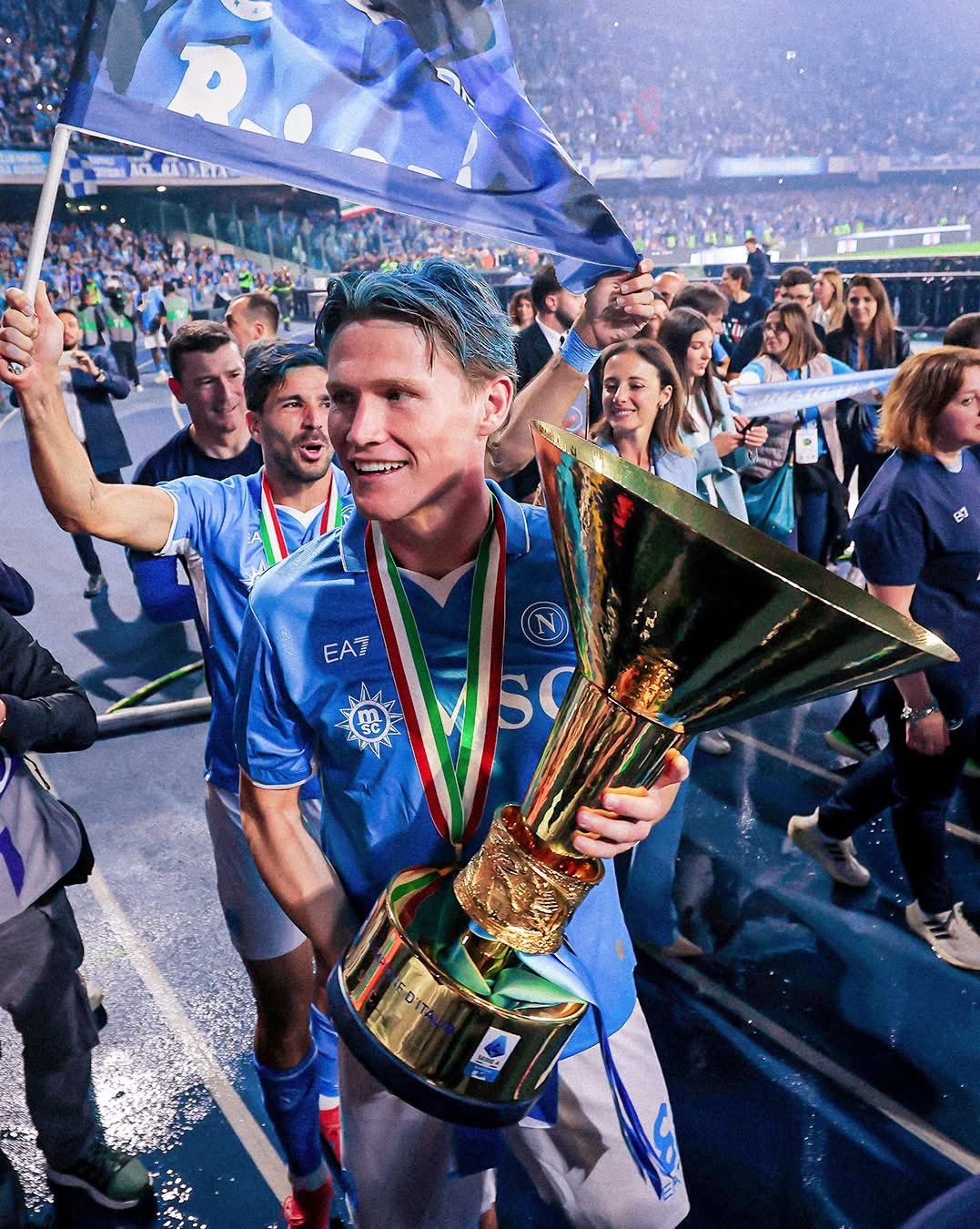
As Serie A returns on 23 August, here’s a compelling look at the history of Italy’s top division, spotlighting its legends, records, dramatic seasons, and darker chapters.
Origins and past champions
- Founded in 1898, Serie A took its modern national format from 1929 onward.
- Juventus leads as the most successful club, with 36 league titles. Inter and AC Milan follow, with 20 and 18 respectively.
Record holders and legends
Appearances
- Gianluigi Buffon tops the list with 657 Serie A appearances.
- Close behind are Paolo Maldini (647), Francesco Totti (619), Javier Zanetti (615), and Gianluca Pagliuca (592).
Goal Scorers
- Silvio Piola remains the all-time top scorer with 274 goals.
- Legendary scorers also include Francesco Totti (250), Gunnar Nordahl (225), and José Altafini (216).
- On a seasonal level, Gunnar Nordahl holds the record with five Capocannoniere awards.
- Ciro Immobile (Lazio past and now Bologna) – Goals: 196+. Immobile is one of the most prolific forwards in Serie A history and scored consistently for Lazio before he moved to Besiktas. He now starts the new campaign with Bologna.
Discipline (Red cards)
- Paolo Montero has the most red cards in Serie A history: 16 dismissals.
- Others with high counts: Di Biagio, Falcone, Ledesma, and Pinzi, each with 12 red cards.
- Single-season red card record: Luigi Apolloni (2000–01) and Gabriel Paletta (2016–17) both had 5 red cards.
Clubs with the most red cards in Serie A history
- Inter Milan holds the record for the highest number of red cards received in Serie A. Known for their physical and intense style of play, they have accumulated over 230 red cards since the league’s inception.
- AS Roma is also among the top clubs in red card counts, with more than 220 red cards historically. Their passionate and sometimes fiery approach has often led to disciplinary actions.
- Napoli and AC Milan both feature in the top five, each with well over 180 red cards throughout their Serie A campaigns.
- Juventus, despite being Italy’s most successful club, has a comparatively lower tally but still exceeds 160 red cards.
Record transfer fees
- Cristiano Ronaldo remains the priciest signing in Serie A history, joining Juventus from Real Madrid in 2018 for €117 million.
- Gonzalo Higuaín previously held the Serie A transfer record with his €90 million move from Napoli to Juventus in 2016.
- Other blockbuster moves include:
- Matthijs de Ligt to Juventus in 2019 for €85.5 million.
- Victor Osimhen to Napoli in 2020 for €77.5 million.
- Arthur Melo to Juventus in 2020 for €80.6 million.
- Past notable transfers: Christian Vieri to Inter (€45 million) and Rui Costa to AC Milan (€42 million) in the early 2000s.
Average season attendance trends
- Serie A’s popularity is surging. The 2023–24 average attendance reached approximately 30,867 per match, making it one of Europe’s best-supported leagues.
- The 2022–23 season marked Serie A’s highest average attendance since the 1997–98 era, clocking in around 30,755 to 30,911. Stadium occupancy rates soared, with many clubs exceeding 90% capacity.
- Building on this momentum, the 2024–25 season continued the trend with an average of 30,842 spectators per match. Clubs like AC Milan and Inter each drew over 70,000 fans per game at San Siro, while Rome and Naples also saw impressive turnout.
Standout seasons and accomplishments
Most goals by a player in a single season
- Gonzalo Higuaín netted a record 36 goals in the 2015–16 Serie A season.
Most Goals by a Team in a Single Season
- Torino scored a staggering 125 goals in the 1947–48 season (21-team format).
- AC Milan hold the 20-team era record with 118 goals in the 1949–50 season.
Attendance Highlights
- The highest reported match attendance was around 90,000, during Napoli vs. Perugia in 1979 (some accounts suggest it may have been closer to 100,000); other sources place an evening highlight at Napoli vs. Juventus in 1974 with 90,736 spectators.
Points totals: Records and extremes
- Highest Points (3 pts per win era):
- Juventus: 102 points in 2013–14—a record for Serie A.
- Inter: 97 points in 2006–07.
- Lowest Points:
- Under the 2-points-for-a-win system: just 24 points by a club in the 1981–82 season.
- In the 3-points-win era: 43 points in 1996–97 was the lowest finish.
Defensive records
- Fewest Goals Conceded in a Season: Cagliari conceded just 11 goals in 1969–70—the best defensive season in Serie A history.
- Most Goals Conceded in a Season: Crotone conceded 92 goals in the 2020–21 Serie A season, the worst defensive performance on record.
Most dramatic Serie A seasons
Serie A has produced title races and relegation battles that still live vividly in fans’ memories. From fairytale triumphs to last-day heartbreaks, the league’s drama has often matched its reputation for tactical mastery.
1986–87: Maradona’s Napoli Makes History
In a season that captured the imagination of an entire city, Diego Maradona led Napoli to their first-ever Scudetto. His genius on the pitch transformed Napoli from underdogs to champions, uniting a region often looked down upon by the northern football establishment. The celebrations in Naples lasted for weeks, with murals and songs immortalising the achievement.
1999–2000: Lazio’s last-day glory
The millennium ended with one of Serie A’s most dramatic finales. Juventus entered the last round two points clear, but a shock 1–0 defeat to Perugia—played in torrential rain—handed the title to Sven-Göran Eriksson’s Lazio. The Biancocelesti’s win over Reggina secured their second Scudetto, sealing a tense, twist-filled season.
2001–02: The “May 5th” collapse
Inter Milan looked certain to win their first title in over a decade, needing only a victory on the final day. But a 4–2 loss to Lazio at the Stadio Olimpico, combined with wins for Juventus and Roma, saw Inter drop to third. The image of Ronaldo in tears remains one of Serie A’s most iconic—and heartbreaking—moments.
2011–12: Conte’s invincibles
Antonio Conte’s first season as Juventus coach delivered a perfect blend of tactical discipline and fighting spirit. The Bianconeri went unbeaten across 38 games, reclaiming the title after the scars of Calciopoli. It was the start of a dynasty that saw Juve dominate Serie A for nearly a decade.
2022–23: Napoli’s modern miracle
More than three decades after Maradona’s heroics, Napoli, now led by Luciano Spalletti, claimed the Scudetto with five games to spare. The attacking brilliance of Khvicha Kvaratskhelia and Victor Osimhen powered their run, with the celebrations recalling the glory of the late ’80s and early ’90s.
The dark side of Serie A: Scandals, corruption, and financial collapse
While Serie A has given the football world unforgettable champions, record-breakers, and moments of magic, its history is also littered with controversy and crisis.
From match-fixing rings to boardroom corruption and financial meltdowns, these darker chapters have shaped the league’s modern identity as much as its glory days.
1980 Totonero scandal
In March 1980, Italian police exposed a vast illegal betting ring—nicknamed Totonero—involving Serie A and Serie B players and officials. Matches were being manipulated to benefit criminal gambling syndicates, with results agreed upon in advance.
The shock was seismic: AC Milan and Lazio were relegated to Serie B, while Perugia, Bologna, and Avellino suffered heavy points deductions.
Star striker Paolo Rossi, later Italy’s 1982 World Cup hero, received a two-year ban.
It was the first major instance of mass relegation for corruption in Italian football and marked the start of a long battle against match-fixing.
2006 Calciopoli scandal
The Calciopoli scandal, uncovered in May 2006, revealed a network of club executives influencing referee assignments through their connections in the Italian Referees Association.
The aim wasn’t always direct match-fixing, but rather ensuring “favourable” officials were given certain games. The investigation implicated Juventus, AC Milan, Fiorentina, Lazio, and Reggina.
Juventus bore the brunt—stripped of their 2004–05 and 2005–06 titles and relegated to Serie B—while the other clubs avoided demotion but began the next season with severe points penalties.
The fallout was unprecedented: high-profile resignations, widespread mistrust, and a blow to Italy’s footballing reputation just weeks before the national team won the 2006 World Cup.
Financial instability and club collapses
Beyond corruption, Serie A has been scarred by financial recklessness. The 1990s and early 2000s saw clubs spending heavily on transfers and wages, banking on continuous European qualification and TV revenues.
When those funds dried up, many imploded under debt. Several historic clubs were declared bankrupt and forced to start again under new names:
- Parma collapsed in 2004 after Parmalat’s bankruptcy, reformed as Parma FC, then went bankrupt again in 2015 before returning as Parma Calcio 1913.
- Fiorentina folded in 2002, re-emerging as Florentia Viola before reclaiming its original name.
- Napoli was liquidated in 2004 and reborn under film producer Aurelio De Laurentiis, climbing back to Serie A within three years.
- Torino went bankrupt in 2005 and restarted as Torino FC.
- Clubs such as Bari, Messina, Siena, Ancona, and Reggiana have suffered similar fates in lower divisions.
These collapses exposed structural weaknesses—overreliance on single wealthy owners, political interference, and poor financial oversight.
While recent reforms have improved governance, Italian football still carries the scars of its turbulent past.
Conclusion
As Serie A embarks on another thrilling campaign starting 23 August, this look into its rich history underscores why it remains one of football’s most captivating leagues. From its early origins through decades of fierce competition, Italy’s top flight has produced legendary players who etched their names in record books and hearts alike. The triumphs of giants like Juventus, Inter, and AC Milan stand alongside unforgettable individual feats—from Piola’s scoring prowess to Buffon’s incredible longevity between the posts.
Yet, Serie A’s story is not just about glory. It has delivered some of football’s most dramatic seasons, where last-day title deciders, stunning upsets, and invincible runs have enthralled fans worldwide. Maradona’s Napoli lifting the Scudetto for the first time, Lazio’s rain-soaked final day miracle, and Juventus’ dominance under Conte reveal the league’s capacity to inspire and surprise.
However, beneath the spectacle lies a complex narrative shaped by scandals and financial upheaval. The Totonero and Calciopoli scandals exposed deep-rooted corruption, shaking the very foundations of Italian football and demanding systemic change. Meanwhile, the financial crises that forced historic clubs like Parma, Fiorentina, Napoli, and Torino to fold and rebuild illustrate the fragility behind the passion.
Today, Serie A enjoys a resurgence—drawing record crowds, commanding massive transfer fees, and nurturing exciting talents—while striving to balance tradition with modern governance. This blend of breathtaking football, historic drama, and ongoing renewal ensures that Serie A continues to captivate new generations and remain an essential pillar of the global game.
As the new season unfolds, fans worldwide will watch with anticipation, knowing that beneath the elegant tactics and fierce rivalries lies a league shaped by resilience, rebirth, and an undying love for the beautiful game.
Share this:
- Share on Bluesky (Opens in new window) Bluesky
- Email a link to a friend (Opens in new window) Email
- Share on Facebook (Opens in new window) Facebook
- Share on Reddit (Opens in new window) Reddit
- Share on Threads (Opens in new window) Threads
- Share on WhatsApp (Opens in new window) WhatsApp
- Share on X (Opens in new window) X
Related

Must See
-


Features
/ 2 months agoEXCLUSIVE INTERVIEW: Marc White on Dorking Wanderers’ rise from park football to global screens and their future aspirations
Dorking Wanderers, a National League South side with international recognition, are taking the social...
By Jameel Mulla -


Boxing
/ 2 months agoTop five sporting events of 2025: From Rory McIlroy finally winning the Masters, to England Women’s Rugby World Cup triumph and more
It’s been another remarkable 12 months of sport that has provided plenty of entertainment...
By Ben Potts -


50 Shades of May
/ 4 months agoFSOM: Grassroots football is dying on its a*** and we should be very concerned – here’s why I give the recreational game 10-15 years max
Sometimes when you poke a dead horse with a pointy stick a miracle occurs...
By John May


