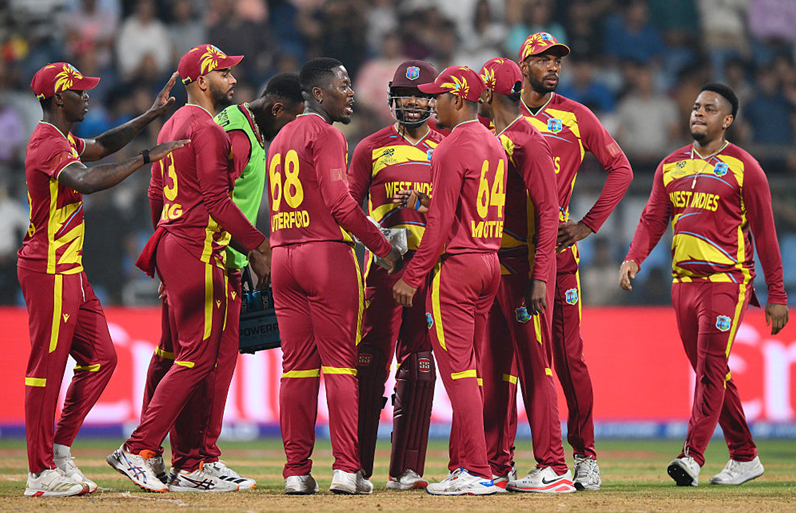
The story of West Indies cricket took another painful turn on March 1 when the team failed to advance from the Super 8s at the 2026 ICC Men’s T20 World Cup, resulting in a continuous low for a side once feared across all formats.
For a region that once dominated world cricket with swagger, confidence and unmatched skill, it now collides with issues such as structure, lack of sponsorship, as well as lucrative franchise deals which lure players away from national duty.
The golden era of dominance
To truly understand the weight of this decline, you have to rewind to the golden era of West Indies cricket. During the 1980s and 1990s, the team was virtually unbeatable with a 15-year unbeaten Test series run, a feat which is still unbeaten to this day.
Led by legends like Sir Viv Richards, widely regarded as one of the greatest cricketers of all time, the West Indies played a brand of cricket that combined aggression, confidence, and brilliance.
A perfect example of this was seen in the 1984 summer in which the West Indies toured England and claimed a 5-0 victory – with the most compelling win coming on the fifth day of the second Test at Lord’s, when England set the touring party 342 to chase with two sessions to spare. Out strolled Gordon Greenidge and peeled off an unbeaten 214 as the tourists won by nine wickets with 12 overs left, which laid down the foundation for an iconic tour both on and off the field.
Sir Viv Richards’ charisma
Richards is known to be the most charismatic individual to grace a cricket field, and he himself embodied dominance and control not just through his batting but through the way he carried himself. This was seen through the episode with the former England captain, Chris Cowdrey.
Newly-appointed skipper Cowdrey strolled out for the toss in a fitted blazer and his full whites, whereas Richards was seen pictured in a Bob Marley T-shirt, surfing shorts and flip flops. When Cowdrey announced England’s line-up for the Test, Richards confidentially interrupted with the words ‘play who you want man, it ain’t gonna make any difference,’ highlighting the charisma of the man and the faith he had in his side.
The fearsome foursome
The side in question was filled with immense talent with that era’s bowling attack, often regarded as the most fearsome (fearsome foursome) in cricket history. The quartet of Malcolm Marshall, Michael Holding, Joel Garner, and Andy Roberts dismantled batting line-ups with relentless pace and precision.
The iconic six, which further includes Curtly Ambrose and Courtney Walsh, two further pillars of the West Indies pace brigade, have a combined wicket tally of 2,010 wickets with a combined average of 22.7, which is truly astonishing for a group of players who played a total of 476 matches.
Facing them was not just a contest, but each ball felt like it must have been an event for opposing batters.
The slow decline
During this reign, the West Indies also won the first two Cricket World Cups (1975 and 1979) led by Sir Clive Lloyd, who paved the way for Richards through his demanding captaincy. But what followed these heydays was not something the cricketing world expected.
By the late 1990s and early 2000s, cracks began to appear. What followed was not a sudden collapse, but a steady decline of dominance. Most of the icons had retired with no admirable replacements taking charge – with only Brian Lara seen as the suitable flag-bearer.
Issues around pay, sponsors and later lucrative franchise deals became the forefront of conversations too.
The franchise era and the fight for retention
Conversations around pay started to occur when central contracts were four, and in some cases eight, times lower than an Indian Premier League (IPL) deal, which lost the top players’ interest. With the IPL only being played in a two-month window, players can hop around the globe to various leagues and earn life-changing sums within a season or two, which was the West Indies’ biggest hindrance as it failed to retain key talent throughout the year.
Players such as Nicholas Pooran, at the age of only 29, retired from international duties in order to manage burnout and to essentially pursue financial stability. He is a talent which is still dominating the world stage but isn’t contributing to the region which built him. The Trinidadian left-handed batter holds the record for being the highest T20I run-scorer for West Indies, which he achieved by surpassing Chris Gayle in 2024.
It goes back to show that the talent is still passing through the ranks, but retention is the biggest contributing factor to the decline, alongside the financial complications.
The 2016 triumph
Despite these challenges, there has been a silver lining of success. This came about in 2016 in the limited-overs format for both the men’s and the women’s side, who both won the T20 World Cup on the same day and with the U19 men’s side winning the 50-over World Cup two months prior.
Within these successful periods, the men’s side felt a sense of pride to prove their board wrong, who failed to back them fully and even had logistical issues with their playing kit, which thereafter meant the players funded the kits themselves. This made their victory even sweeter and the captain, Darren Sammy, made it known saying, ‘Nobody gave us a chance. We had a lot of issues, we felt disrespected by our board. All these things brought this team together.’
The man of the moment was Carlos Brathwaite, who launched four sixes off Ben Stokes’ final over to secure the second T20 World Cup. During this year’s showpiece at Eden Gardens, he felt the occasion against India was ‘nostalgic’, but the current side couldn’t get over the line against the eventual champions.
A legacy too great to fade
West Indies cricket is a story of two extremes, with unmatched dominance followed by prolonged struggle, with glimpses of brilliance in between. From the swagger of Richards to the explosive T20 triumphs, the legacy is too rich to fade quietly.
The question now is whether the West Indies can rise again and if it can rediscover the unity and purpose that once made it the most feared team in the world.