
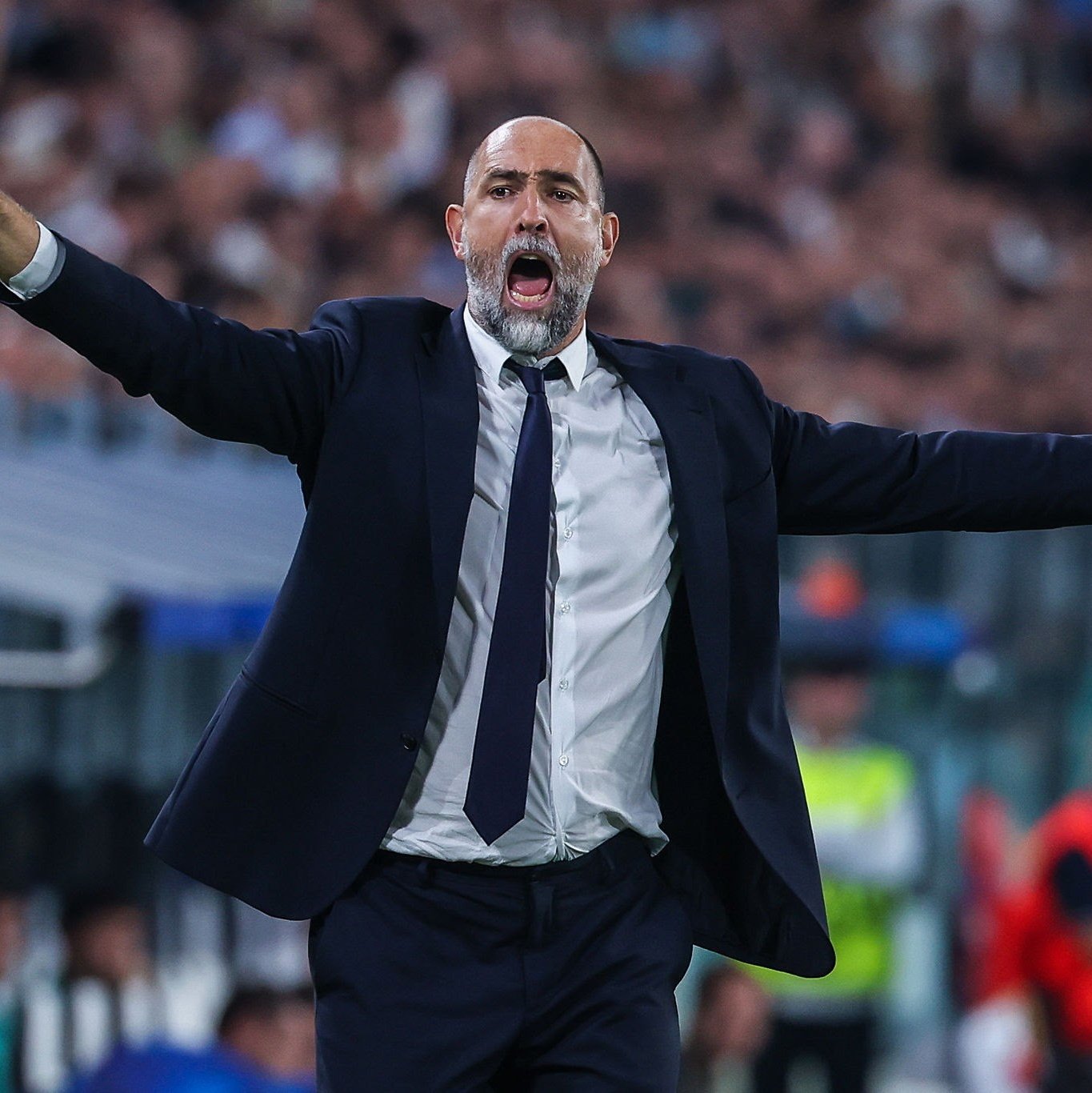
Igor Tudor has been named interim head coach of Tottenham Hotspur, stepping into the role at a crucial moment in the club’s season.
The Croatian brings intensity, tactical discipline and a reputation for demanding high standards, having previously impressed in Serie A with his structured, high-energy approach.
Known for favouring aggressive pressing and defensive organisation, Tudor’s appointment signals a desire for immediate stability and a reset in mentality following the departure of Thomas Frank.
With Spurs still fighting on multiple fronts, Tudor’s short-term task is clear: restore confidence, tighten the back line, and reignite the competitive edge that has defined the club’s best periods in recent years.
In this profile, we’ll look back at his playing days, assess his managerial achievements, explore his expectations for the remainder of the 2025-26 season, and try to measure how he compares with the great Serie A coaches of recent decades.
About Igor Tudor
Tudor has been a name increasingly spoken with interest across Italian football – not just for what he once was as a player, but for what he is becoming as a manager.
A former Croatian international, he has navigated a managerial path that’s taken him through Croatia, Turkey, France, and various parts of Serie A.
After being appointed manager of Juventus in March 2025, Tudor was tasked with restoring credibility, consistency, and trophy hopes to one of Italy’s most storied clubs.
Tudor was dismissed by Juventus in October after a turbulent spell in charge, where inconsistent performances and tensions over tactical direction ultimately cost him the job.
Despite moments of intensity and defensive structure, results failed to meet the club’s expectations and the hierarchy opted for change.
Now, Tudor has been handed a fresh opportunity as interim head coach of Tottenham Hotspur, tasked with restoring stability and competitiveness during the closing stages of the season.
Playing career
- Early Years & Hajduk Split: Tudor began his professional footballing career at his hometown club, Hajduk Split, in 1995. As a young defender (able to play centrally or in more defensive midfield roles), he impressed with his technique, composure with the ball, and aerial strength.
- Juventus Era: In 1998 he made the major move to Juventus, where he would spend the bulk of his playing career. With Juve, Tudor won several trophies: Serie A titles, Supercoppa Italiana, and was part of the squad that reached (but lost) the Champions League final in 2003. He also spent time on loan at Siena, and later returned to Hajduk Split before retiring in 2008 due to recurring ankle problems.
- International Career: Tudor was a Croatian regular between the late 1990s and mid-2000s. He was part of the Croatian squad that finished third in the 1998 FIFA World Cup, and took part in Euro 2004 and the 2006 World Cup. His international career was limited somewhat by injuries, especially later on.
Managerial career and achievements
Early managerial steps
- Tudor’s transition into coaching began with Hajduk Split, managing youth and then taking over the first team around 2013-2015. He won the Croatian Cup during this period.
- He then moved to PAOK (Greece) in 2015 but was dismissed in early 2016 due to ‘unsuccessful results and comments’ about squad quality.
- His next stops were Karabukspor (Turkey) and Galatasaray. The spells were mixed: some good individual performances but ultimately less stability and fewer silverware outcomes than the elite managers.
Work in Italy, France & resurgences
- Udinese: Tudor’s work at Udinese is often praised. He first came in during a difficult moment and helped them avoid relegation. He returned to Udinese later, again in challenging situations.
- Hellas Verona: Perhaps one of his more consistent successes. Tudor’s style at Verona (high intensity, pressing, sometimes attacking formations) allowed Verona to punch above their weight. He secured solid mid-table finishes and earned respect.
- Marseille: He led Olympique de Marseille to a third-place finish in Ligue 1 before departing in 2023. That was probably one of his more high-profile successes outside Italy.
- Lazio: In March 2024, he took over Lazio after Sarri resigned. His time there was shorter, but he managed to steady the ship somewhat in Serie A but failed to connect with the fans.
Recent ole & Juventus appointment
- He was appointed manager of Juventus in March 2025, replacing Thiago Motta. The goals were immediate: restore confidence, improve performance, and secure Champions League qualification.
- Under his early management, Juventus secured a top-four finish in 2024-25, which meant Champions League qualification. That’s a positive outcome given the unstable situation when he arrived.
What he has achieved
Tudor’s trophy cabinet is not as full as some of the legendary managers, but his achievements are nevertheless noteworthy:
- As a player, multiple Serie A titles with Juventus, Supercoppa Italiana wins, and other domestic trophies.
- As a manager, the standout ‘wins’ are more in terms of overachieving, avoiding relegation (e.g. with Udinese), strong league finishes (e.g. with Verona, Marseille) rather than major trophies yet.
So far, no major league title as head manager of an elite club like Juventus or LBIG-level titles in France or Italy, but a track record of improving teams and rescuing difficult situations.
Expectations for the 2025-26 Season
Here’s what Tudor seems to be aiming for and what observers expect:
- Tottenham have brought Tudor in on an interim basis with a very specific set of short-term goals.
- At a club sitting just above the Premier League relegation zone, the primary expectation is that he stabilises results and helps keep Spurs in the top flight, arresting the slide that led to the dismissal of Thomas Frank.
- Tudor is also expected to improve consistency and competitiveness across matches, bringing greater organisation and energy to a squad struggling for form. With a demanding fixture list – including Premier League games and a Champions League last-16 tie – the hope is that his experience in turning around difficult seasons quickly will yield positive results in both competitions.
- While long-term planning is reserved for a permanent appointment in the summer, Tottenham’s immediate focus under Tudor is on defensive solidity, sharper performances and tangible points to lift them clear of danger by season’s end.
How he rates among Serie A Coaches
Tudor is not (yet) in the same tier as the most decorated managers in Italy, but his trajectory suggests he is moving in that direction. Here’s how he stacks up:
- Strengths: Tactical flexibility, ability to rescue teams in crisis, instilling high intensity and pressing, ability to get immediate positive responses (e.g. the win vs Genoa early at Juventus).
- Challenges: Consistency over full seasons; winning major trophies (Scudetto, Coppa Italia, Champions League); coping with the pressure and expectations of elite clubs.
- Compared to legends like Antonio Conte, Carlo Ancelotti, Massimiliano Allegri, Maurizio Sarri, or even emergent stars like Stefano Pioli or Gian Piero Gasperini, Tudor is a bit behind in silverware, but gaining respect.
- His playing legacy with Juventus also gives him credibility among the Juventus fanbase—he knows the club’s culture. That helps.
Conclusion
For Tudor, Tottenham represents both a rescue mission and a proving ground.
His career to date has been defined less by long dynasties and more by moments of intervention — stepping into instability, restoring order, injecting intensity, and leaving teams more competitive than he found them.
At Spurs, the brief is clear: survival first, structure second, belief restored always. If he can steady the defence, re-ignite the squad’s aggression, and deliver results under pressure, he will not only secure Tottenham’s immediate future but also strengthen his own reputation as one of Europe’s most dependable crisis managers.
He may not yet sit alongside the most decorated figures of modern Italian coaching, but this is precisely the kind of stage that can change narratives. The coming months will determine whether Tudor remains an accomplished fixer – or evolves into a manager capable of building something lasting at the highest level.
What will ultimately define Tudor’s spell at Spurs – survival, style, or silverware?
Share this:
- Share on Bluesky (Opens in new window) Bluesky
- Email a link to a friend (Opens in new window) Email
- Share on Facebook (Opens in new window) Facebook
- Share on Reddit (Opens in new window) Reddit
- Share on Threads (Opens in new window) Threads
- Share on WhatsApp (Opens in new window) WhatsApp
- Share on X (Opens in new window) X
Related

Must See
-


Features
/ 2 months agoEXCLUSIVE INTERVIEW: Marc White on Dorking Wanderers’ rise from park football to global screens and their future aspirations
Dorking Wanderers, a National League South side with international recognition, are taking the social...
By Jameel Mulla -


Boxing
/ 2 months agoTop five sporting events of 2025: From Rory McIlroy finally winning the Masters, to England Women’s Rugby World Cup triumph and more
It’s been another remarkable 12 months of sport that has provided plenty of entertainment...
By Ben Potts -


50 Shades of May
/ 4 months agoFSOM: Grassroots football is dying on its a*** and we should be very concerned – here’s why I give the recreational game 10-15 years max
Sometimes when you poke a dead horse with a pointy stick a miracle occurs...
By John May


