
A footballing circumnavigation of the globe from the Southampton Sunday Leagues to Taiwan, via the Bahamas, Pacific Islands and Japan is a long and tortuous one.
But it is one that a footballing Phineas Fogg named Gary White has made.
Not so long ago, FSOM ran a football team in the Southampton Sunday League. Like most Sunday League teams, Royale Marine FC drew its players from wherever it could get them; the pub on a Saturday night, the side of a road on a Sunday morning, a lasso of a player’s cousin.
Darren White was a tricky left winger who one Sunday dragged his brother Gary along. The ink was barely dry on his registration form when we wondered what the hell he was doing playing for us.
He had been on the books at Southampton FC as a schoolboy but a series of niggly injuries in his development years prompted the club to show him the door.
While he wasn’t good enough for the Saints, he was pretty sensational for Royale Marine, showing the gulf in ability and class between Sunday League wannabees and dreamers and those who flutter in the spotlight of the professional game, even at the risk of flying too close to the bulb and being burned to a crisp.
Gary played at a high standard of non-league football, but even after a couple of years playing for Fremantle City in Australia, it dawned on him that he was never going to be good enough to be a professional player but with a burning desire to forge his way in the game, decided the way forward was coaching.
He obtained his coaching badges at a ferocious rate, becoming one of the youngest top qualified coaches in the country, and soon embarked on a pretty remarkable footballing odyssey.
Having earned himself a reputation as a coach and with the brass neck to apply for jobs. at the age of 24 he was appointed the national team head coach and national technical director for the British Virgin Islands.
At 25 he became one of the youngest coaches to navigate a CONCACAF World Cup qualifying campaign and although they did not qualify for the finals, the BVI shot up 28 places in Fifa’s rankings.
His next role was the stuff of dreams as he took on a similar role for the Bahamas FA.
In a role where his daily commute would be by speed boat from Nassau to Grand Bahama, Eleuthera, Abaco or Cat Cay, it would be all too easy to kick back with a daiquiri on a hammock under a couple of swaying palms before slipping a pair of sandals on and moseying along to the football pitch.
But under White, the Bahamas were FIFA’s highest movers in the 2006 rankings, propelling them up 55 places in the rankings. In addition to being national team manager, he set up a coaching education programme for national coaches, and also a national coaching philosophy in a teams and player development strategy.
Such things got him noticed and he was poached by the Seattle Sounders elite player development programme.
During his time in Washington State, the Sounders won eight US Youth soccer championships and became a real powerhouse in the US player development programme.
Perhaps the rustle of wind in the palm trees called to White and he took on the role of national team coach and technical director of the Guam national team.
Ostensibly not much more than a land based aircraft carrier for the US, and with a population of 168,000 Guam is one of the Micronesian Islands which might be a setting for Lord of the Flies.
But they play football there, the game having been imported as recently as the 1960s, thanks to an Irish priest and the owner of a construction company.
White again worked his magic and launched them into a World Cup qualifying campaign in an Asian Confederation group that included regional big boys Iran, India and Oman. Wins over India and Turkmenistan and draws with Oman wooshed Guam 50 places up the international rankings.
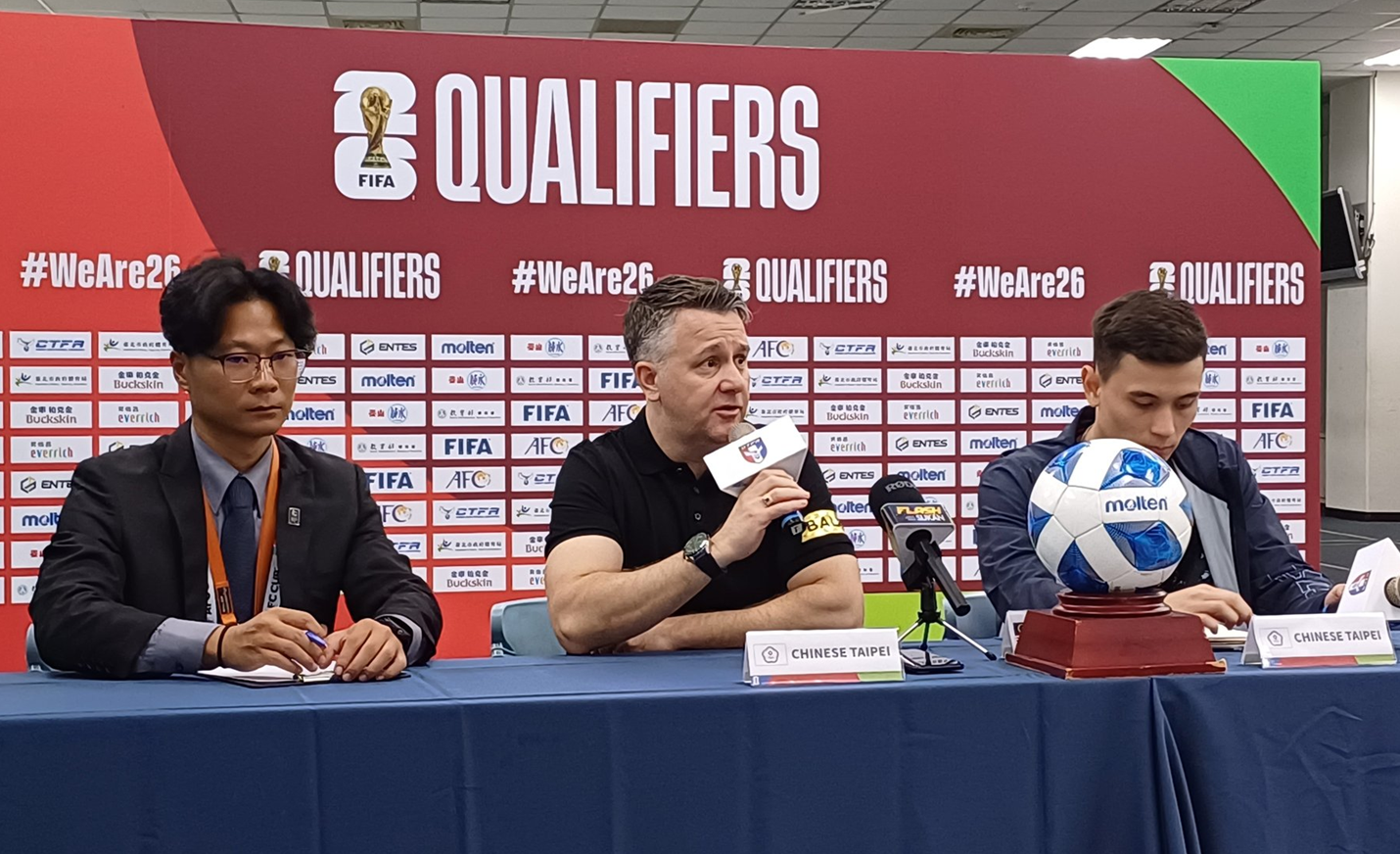
Again, his work got him noticed and he was appointed head coach of struggling China League One outfit Shanghai Shenxin. He comfortably saved them from relegation but left the following season to take on his first spell as head coach of the Chinese Taipei (Taiwan to you and me) team.
His remarkable journey then took him to Hong Kong (coach of the national team) and Japanese J-League outfit Tokyo Verdy, back to China to manage Nantong Zhiyun before returning for a second spell to Taiwan.
Gary White is an English football coach with a record of bringing success wherever he has worked, and whose career has provided him with a passport with more stamps than a village post office.
Yet until now, you have probably never heard of him.
FSOM brings you this tale for two reasons.
The first is that for all his success, his clear ability in coaching individual teams and setting up programmes as technical director, no English team has taken a punt on him.
That says more about the six-fingered inbred nature of the English game, where old-boy chummery and status as a former player counts for more than a coach with no professional playing experience in the English game, and is subsequently treated with the suspicion normally afforded a week-old kipper.
White has long expressed his interest in getting into the English game, possibly not least for the reason he needs to get his laundry up to date after flying round the world and constantly being on the move.
He’s probably applied for numerous jobs, but no club has expressed an interest, more likely to their detriment.
But the other reason for relating his tale is to shout out for the sporting minnow in the world.
The sporting world has always had its minnows and underdogs, the little people who bring romance to a sport otherwise dominated by soulless megaliths and automatons.
Who remembers Eric ‘the Eel’ Moussambani the swimmer from Equatorial Guinea in the 2000 Olympic games? He entered the 100m freestyle despite never having seen an Olympic sized pool. He swam with the pace of a jellyfish and was so slow, by time he finished the other competitors were out of the pool, towelled off, dressed and in the cafe having a hot chocolate.
Then there’s our very own Eddie ‘The Eagle’ Edwards, GB’s first winter Olympian in the ski jump. Instead of flying through the air like an eagle, he flopped off the end of the ski jump table like a dropped bin bag full of rubbish.
Both Eddie and Eric split opinion. While some saw them as game, plucky triers, others saw them as time-waters who threatened to make a mockery of the sport.
The second view came mostly from those at the top of the sport, perhaps the very people who should have been reaching out to promote and widen it.
The direct result of both Eddie’s and Eric’s participation was that the IOC introduced qualifying conditions for both sports, ensuring there would not be a repeat.
As the powerhouses in sport continue to gain power, it is easy for them to dismiss the minnow as a waste of time and that is increasingly the case in football and cricket.
FIFA has more members – 211- than the United Nations has countries, at 193. That means there are 211 territories which have an organised football association, playing organised competitive football. This includes the likes of the Maldives. How many of us though that sport in the Maldives was limited to sun lounging and spear fishing? Football’s biggest challenge there might well be to continue playing as long as possible until rising sea levels threaten not only waterlogged pitches but the very existence of the worlds lowest lying archipelago.
Pacific islands much smaller than Guam have organised football tournaments which have come a long way from the days when winning cup finalists were given the chance to eat the losers.
But there are mumblings among the big clubs from Europe’s big leagues competing in the Champions League, that those from the smaller tournaments are only clogging up the fixture lists and creating an embarrassment with their presence and it is a waste of time and effort for the giants to flex their muscles and issue a thumping.
Closer to home, Premier League clubs whinge and whisper about playing opposition from the basement of domestic football’s pyramid, but try sharing that with Macclesfield who dumped Crystal Palace out of the FA Cup.
The same can be seen in cricket, where the ICC has 108 members. Again, that’s 108 countries which have an organised structure where a form of cricket is played. They range from the alps of Austria to the polders of Holland and Belgium, from the tropical rain forests of Brazil to the steppes of Uzbekistan.
A day in FSOM’s lifetime will never come when Mexico’s openers walk through the Long Room at Lord’s to face England’s attack.
But who would have thought 50 years ago that Ireland would be a Test playing nation? Or Bangladesh?
They became Test-playing nations with the right to sup at the high table with the best by playing them, and surely any sport which sees itself as a worldwide mission to spread the gospel of that sport to the world’s far flung places, has the responsibility to provide the minnows with the opportunities to swim with the sharks, even at the risk of being gobbled up.
It might not be thought so at the time, but a double-figure drubbing at football, or a triple-digit run defeat in cricket, is part of a tough, long learning curve.
As somebody who boosted the British Virgin Islands, the Bahamas, Guam and Taiwan to their highest FIFA rankings, don’t tell Gary White that sporting minnows are a waste of time.
Share this:
- Share on Bluesky (Opens in new window) Bluesky
- Email a link to a friend (Opens in new window) Email
- Share on Facebook (Opens in new window) Facebook
- Share on Reddit (Opens in new window) Reddit
- Share on Threads (Opens in new window) Threads
- Share on WhatsApp (Opens in new window) WhatsApp
- Share on X (Opens in new window) X
Related

Must See
-


Features
/ 2 months agoEXCLUSIVE INTERVIEW: Marc White on Dorking Wanderers’ rise from park football to global screens and their future aspirations
Dorking Wanderers, a National League South side with international recognition, are taking the social...
By Jameel Mulla -


Boxing
/ 2 months agoTop five sporting events of 2025: From Rory McIlroy finally winning the Masters, to England Women’s Rugby World Cup triumph and more
It’s been another remarkable 12 months of sport that has provided plenty of entertainment...
By Ben Potts -


50 Shades of May
/ 4 months agoFSOM: Grassroots football is dying on its a*** and we should be very concerned – here’s why I give the recreational game 10-15 years max
Sometimes when you poke a dead horse with a pointy stick a miracle occurs...
By John May


