If The Lion King has taught us anything, it is that the animal kingdom is cruel.
And wildlife documentaries prove there is no space for sentiment even though we feel sad at the sight of the old bull elephant, having stood staunch guard over his harem and sired more than his share of calves over the years, staggering his last path to the watering hole for one final glug, only to find his legs folding beneath him as he slowly collapses like a stricken oak tree, causing the circling vultures to tuck their napkins under their chins and break out their eating irons.
And there is no sadder sight in sport than the once invincible hero showing he has feet of clay, and the seeming bubble of immortality is popped with a huge pin.
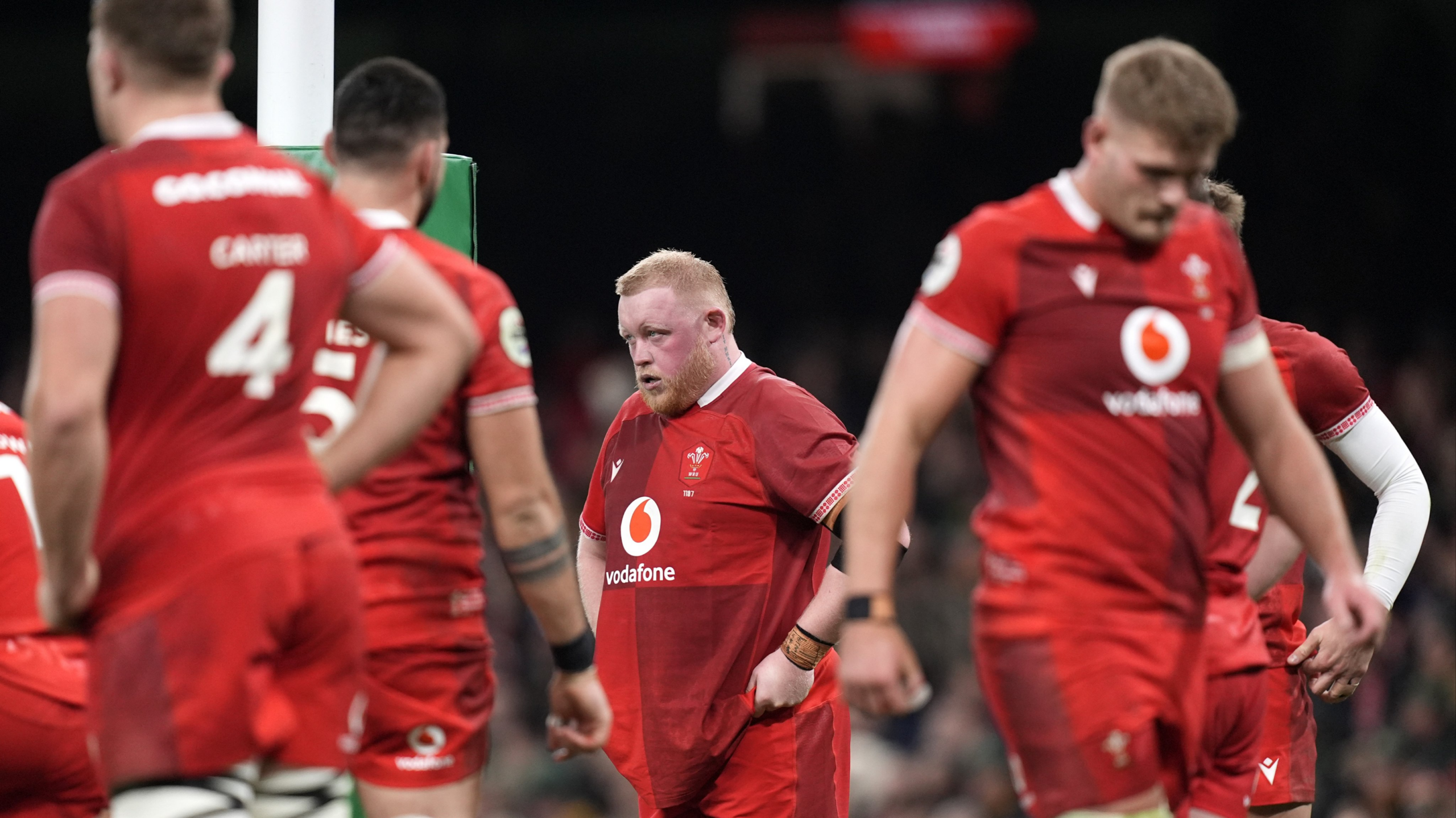
So, it was with Welsh rugby and you could almost hear Sir David Attenborough’s velvety, hushed tones presiding over their own wobble at the waterhole.
Their 73-0 loss to South Africa wasn’t just a defeat, or a humiliation. It was the sad and chastening end to an era.
Wales beat Japan in July to end an 18-match winless run, the longest-ever for a tier one rugby nation but they are currently the poorest of tier-one teams and if there was relegation, would be pitting their skills against tier-two countries such as Portugal, Spain and dots in the Pacific Ocean.
Between 1969 and 1980, Wales won eight Five Nations championships – including three Grand Slams – and finished fourth at both the 2011 and 2019 Rugby World Cups. They certainly punched above their weight for a country with a population of around three million.
I have to fess up that I am not the biggest rugby fan, but any sports fan could not fail to be impressed by magical players such as Phil Bennett – he of the ridiculous side-step that sent opponents so far the wrong way they had to pay to get back into the stadium – Gareth Edwards, JPR Williams – the long-haired full-back with mutton chop bugger grips who was a doctor by profession – and The Prince, Barry John.
They were allowed to parade their dazzling skills courtesy of Charlie Faulkner, Bobby Windsor and Graham Price – aka The Pontypool Front Row.
The bulldozers in human form dominated any scrum they went into and such was their renown for the fear they struck into opponents that Welsh troubadour Max Boyce penned a song about them. It’s on YouTube somewhere but I don’t advise you spend valuable time you will never get back, looking for it.
Wales, as a nation, produced an abundance of top-quality players, The best were the apex of a pyramid that had a wide base that spread throughout the valleys, where rugby was in the bloodstream.
It is something of a myth that to assemble a strong Welsh team all the selectors had to do was stand at the top of a coal-mine shaft, shot down the position of the players needed, and a prop, scrum-half or full-back would be whisked up in the next cage. But top-class players oozed out of the Welsh soil and don’t forget, this was in the amateur days when players played for the love of it.
Even in the 2010s Welsh rugby was still a force, with Warren Gatland coaching them to Grand Slams with players such as Jonathan Davies, Alun Wyn Jones, Sam Warburton and Leigh Halfpenny.
But since then, it has declined faster than the Roman Empire when Atilla the Hun came calling.
In the post-mortem of the South Africa defeat, people far better qualified than me have attempted to explain the decline of Welsh rugby. It might be a societal thing. The mines and steelworks that produced hard, tough, passionate men, no longer exist. Somehow you cannot imagine a modern-day Pontypool Front Row emerging from a Caerphilly call centre or Treorchy IT hub.
Bad administration, including the poor use of the huge revenue raised from sell-out Principality Stadium games to trickle back into the lower levels of the game, poor coaching networks, any number of reasons have been cited. but none seem to offer a definitive answer.
On the same day the Welsh bull elephant was having its last trunkful at the waterhole, club sides Scarlets and Cardiff achieved good wins in the United Rugby Championship, their ranks bolstered by the return of players released from compulsive international duty and who might otherwise have lined-up against the double world champions.
As Sir David Attenborough himself might say in his hushed tones: ‘Are we witnessing the last days of this magnificent species or can something be done to save it?’
Maybe the circling vultures will yet untuck their napkins and pocket their knives and forks.
An ode to the late Robin Smith
FSOM cannot let this week pass without mention of Robin Smith, the former England batsman who died this week.
In my youthful days working in provincial newspapers, I had the privilege of covering Hampshire cricket when Smith was in his pomp.
I suppose the earliest occasion he came to the attention of the local press was when he turned out in the Southampton Evening Cricket League.
Freshly arrived from South Africa, he played as much cricket in English conditions for as many clubs as possible. And this included turning out for the 16-overs-a-side romp in the Evening League for a team sponsored by a local hairdressing salon, at the magical setting of Hoglands Park, the only cricket ground in England smack in the centre of a city. On more than one occasion, the small boundaries and lack of high fencing put cars on the surrounding roads at serious risk from ‘Judge’s’ power.
One of the beauties of Smith’s batting was that you could hear him play, a godsend for reporters – no names! – who tended to nod off in warm, soporific press boxes in the warm afternoons.
A delivery short and wide of off-stump would signal a THWACK! like a starting pistol as the awesome Smith square cut was executed with frightening power, followed a split second later by a THUMP! as the ball cannoned into the advertising hoarding. Either was more effective than any alarm clock in waking snoozers.
You felt sorry for any poor sap sent to field at point, expecting at any moment the ball to arrive with the velocity of an artillery shell, and likely to inflict the same amount of damage.
Watching him day in, day out for nigh on 10 years was a special experience, and although he tried to maintain that necessary distance between professional sportsman and journalist, he was always unfailingly polite even when it came to refusing an interview. It was something he rarely did.

Credit: X/@hantscricket
I was a right pain in the a***, always pestering him for time for one main reason. He was box office.
But having the privilege of watching him every day also provided an insight into his darker corners.
It was perceived that for all his lack of fear against the West Indies’ battery of quicks, and the destructive power in his square cuts, hook and pulls, he struggled against spin. It was said that Judge preferred facing quicks as it gave him no time to think, whereas spinners could confuse him more than a fairground flim-flam man.
To be fair to Smith the Indian spinners who tormented him on England’s 1993 tour of the sub-continent, did the same to most top-class batters and his other nemesis was Shane Warne and who didn’t suffer at his hands, although there was a tangible sense of relief when Warnie became Smith’s team-mate at Hampshire. What a time that was to cover a team with those two in it!
For all his majesty at the crease, you could see a hint of self-doubt in his eyes, put there by his critics and also by himself, to the point it became a self-fulfilling prophecy. If people told him he had weaknesses, they might be right!
He did have his trials and tribulations when he stopped playing, as many professional sportsmen do who struggle to fill the void and FSOM has no doubt there will be stuff seeping out in the coming months which might threaten to buff off the shine of his career.
Sport journalists are not supposed to indulge in hero worship, but to treat those on whom they report in a strictly professional manner.
But I would just like to thank Robin Smith for providing me with hours of pleasure, and almost – but not quite – reducing FSOM to that despised and derided journalistic figure, a fan with a laptop.