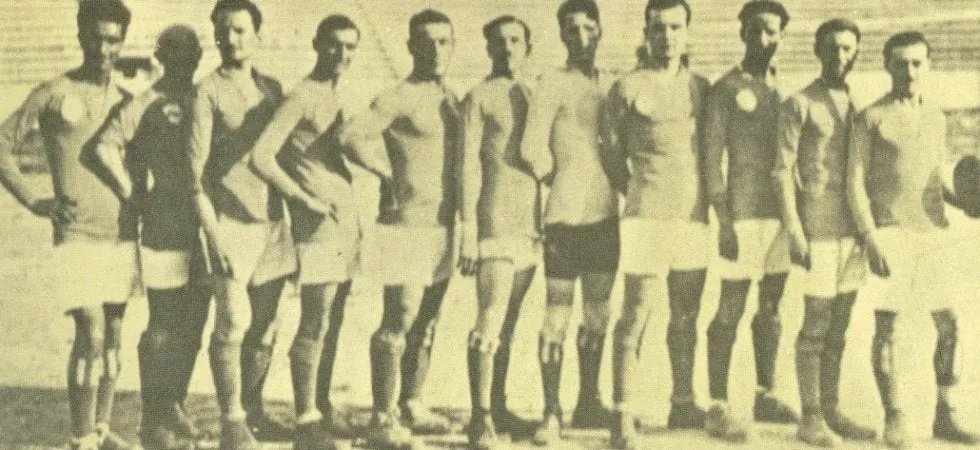
Italian football is rich in history, but not all of it is straightforward. Some chapters are marked by controversy, unfinished business, and debates that span over a century.
One such episode is the 1915 Italian football championship—a season interrupted by the outbreak of World War I, leaving fans, clubs, and historians divided over what might have been.
For Lazio supporters, this unresolved chapter represents more than just a historical curiosity; it symbolises a fight for recognition, identity, and respect for their club’s early achievements.
The 1915 Championship context
The 1914–15 season was progressing normally when Italy entered World War I in May 1915. As many players enlisted and public focus shifted to the war effort, the championship was abruptly halted.
At the time, Genoa and Lazio were the leading teams in their respective groups, with Lazio having performed impressively, raising hopes of a maiden Scudetto.
Due to the extraordinary circumstances, the FIGC (Italian Football Federation) decided not to officially award the title that year, leaving the championship in a state of limbo.
Due to the extraordinary circumstances, the Italian Football Federation (FIGC) decided not to officially award the title, leaving Lazio’s potential glory unrecognised.
While Lazio had completed their fixtures, Genoa still had matches left, adding fuel to the debate over which team should be recognised as champions under such unusual conditions.
Lazio’s claim and the controversy
Lazio, then a relatively young club founded in 1900, had shown remarkable promise and believed they deserved recognition for their performances during the halted season.
Their fans argue that Lazio was denied a rightful chance at glory due to factors beyond the pitch and that the championship should be retroactively acknowledged or at least shared.
For decades, Lazio supporters have campaigned for the title to be recognised or at least co-awarded, claiming that their club’s efforts were unfairly sidelined in favour of Genoa and other traditional powers.
The controversy deepened when, in later years, official records and club histories often excluded Lazio from 1915 title discussions, fuelling a sense of historical injustice among their fanbase.
Fans’ campaigns and calls for justice
Lazio fans have organised petitions, demonstrations, and social media campaigns demanding the FIGC formally recognise the 1915 championship status. Their argument rests on:
- The exceptional nature of the wartime interruption which affected all teams equally.
- Lazio’s competitive standing before the halt.
- The precedent set by other countries or sports recognising titles in interrupted seasons.
Supporters also emphasise that sharing the title would honour the club’s early history and its contribution to Italian football’s development.
The Federation’s stance
The FIGC has maintained its position that no official champion was declared for the 1915 season due to the war, and that the title cannot be awarded retroactively without complete competitive integrity.
While respectful of the fans’ passion, the Federation argues that the competition was not concluded under normal sporting conditions, and thus the title must remain vacant.
Legacy of the 1915 title debate
The 1915 championship controversy remains a poignant example of how historical events can intersect with sports, leaving lasting debates over fairness and recognition.
For Lazio fans, it symbolises more than just a trophy; it represents a fight for identity, respect, and historical justice—a chapter that keeps the club’s early spirit alive.
Current Status
As of mid-2025, no official resolution or acknowledgment has been issued by the FIGC regarding Lazio’s claim to the 1915 Scudetto. The commission’s report remains unpublished, and the title has yet to be awarded.
Lazio’s case remains pending—with both legal and moral arguments continuing to fuel the debate.
Final thoughts
In conclusion, the battle over the 1915 Scudetto is far more than a dispute over silverware—it’s a century-old wound that blends football, history, and emotion.
For Lazio supporters, the campaign is about preserving the club’s heritage and securing recognition for a team that, in their eyes, was robbed of its rightful moment of glory.
For the FIGC, it is a question of precedent, fairness, and the integrity of competition.
Until a definitive verdict is reached, the 1915 title will remain a ghost of Italian football’s past—forever sparking debate, passion, and a reminder of how the game’s history is as contested as the matches themselves.