After the disappointment of the home defeat against Como and the bore draw away at Lecce, expectations for the visit of Genoa were low. Very low.
This one already felt different before a ball was kicked. The ultras had announced a boycott — and unlike the partial protest earlier in the season against Lecce at home, this time the hope was that everyone would stay away. A full statement, not a symbolic one.
For me, it was strange on a personal level too. Serie A’s habit of releasing kick-off times at painfully short notice meant I couldn’t get the day off work. No train, no Ponte Milvio, no Curva. I was always going to have to settle for watching on TV.
The week before (acceptance, then reality)
By the start of the week I’d accepted I was missing the game. It was frustrating, but understandable — late scheduling makes time off almost impossible. And truth be told, even if I had managed to get the day off, I’d have joined the boycott anyway.
I genuinely believe the boycotts matter. I understand the argument that people love Lazio more than they hate Claudio Lotito — I agree with that sentiment. But sometimes loving something means being willing to do something uncomfortable for it. Something drastic. Empty seats send a message that banners and chants alone never quite manage.
Then football stopped being the most important thing.
On the Monday after Lecce, I went for a routine “mature adults” check-up — the polite way of saying over 40. I’m not getting any younger, and I’m the first to admit my lifestyle hasn’t always helped that fact.
The results weren’t great. Blood sugar too high. High cholesterol. High blood pressure. Since moving to Italy six years ago, I’ve worked hard on my health and managed to lose around 30kg — something I’m genuinely proud of — but clearly, there’s still work to do.
Later in the week I found myself in hospital for further tests, and to cut a long story short, I’m now on a fair bit of medication and facing the reality that my lifestyle has to change. Properly, not half-heartedly.
I was signed off work from Wednesday to Saturday. I joked to Liosa that I could now go to Rome after all and join the boycott.
She didn’t see the funny side.
The match (from a distance)
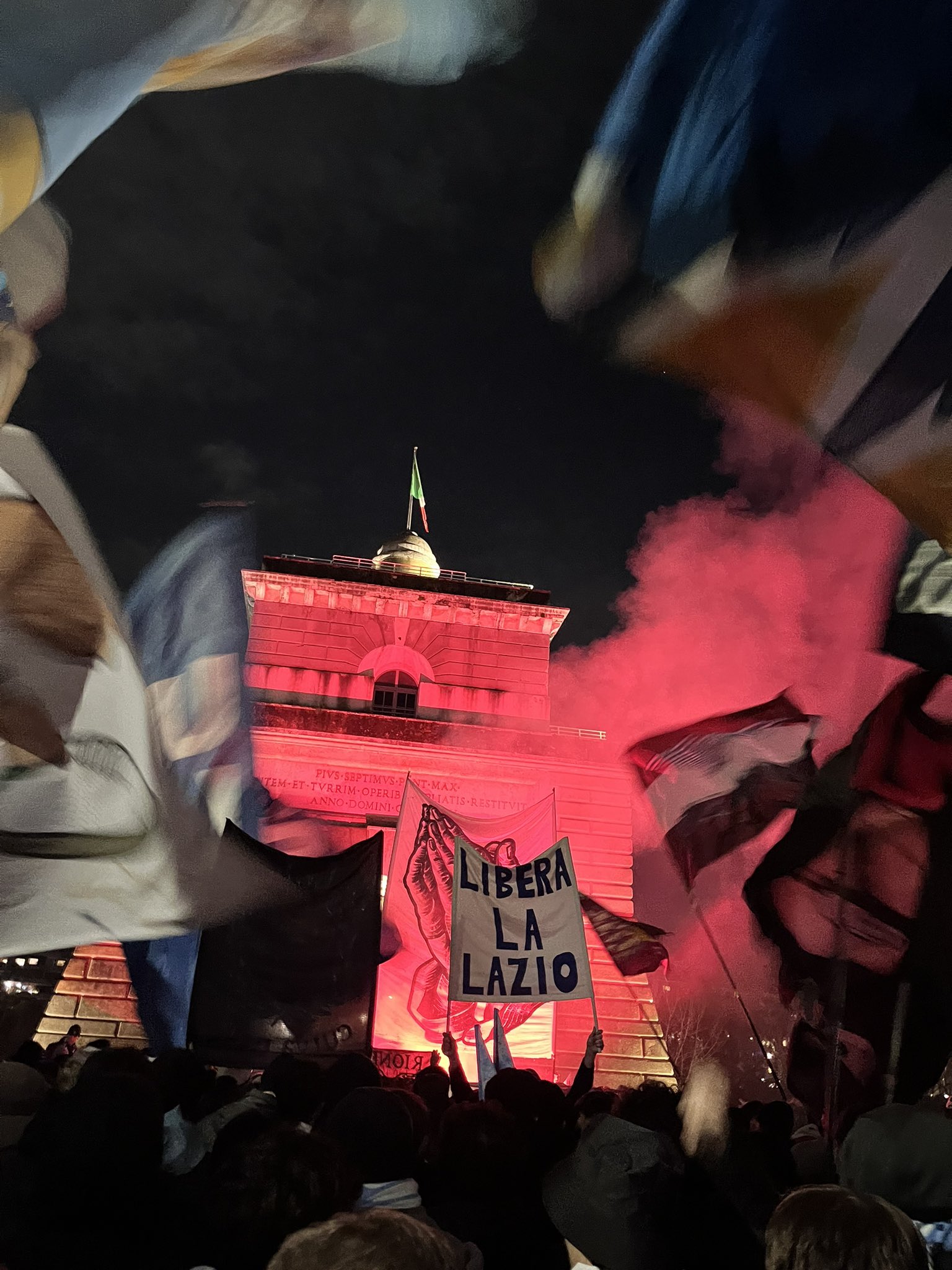
So instead, I watched from home. One eye on the TV, the other on photos filtering through from Ponte Milvio and the Olimpico — images of empty spaces, closed gates, and a boycott that felt far more visible than before.
On the pitch, chaos reigned.
It was a strange game, even by Lazio standards. At times it felt like the referee had taken pity on us, awarding a fortunate penalty in a match where control was scarce. Incredibly, the game ended with three penalties — one of those stat lines you have to double-check because it doesn’t quite seem real.
In the end, it was Danilo Cataldi who decided it. Again. For the second time this season, he stepped up late and delivered under pressure, converting a dramatic penalty to win the game. Watching it unfold from the sofa felt surreal — joy diluted by distance, relief mixed with disbelief.
Meanwhile, the boycott itself felt like the real headline. Attendance was visibly low, and the images spread quickly. By the next morning, international media were carrying photos and reports of an Olimpico stripped of its usual noise and colour. A quiet stadium speaking loudly.
Conclusion
This was a night where football almost felt secondary — and yet somehow still managed to encapsulate everything about being a Lazio fan right now.
On the pitch, we won. Just. Thanks to penalties, drama, and another moment of nerve from Cataldi. Off it, the boycott landed harder than many expected, sending a message that travelled well beyond Rome.
For me personally, it was a reminder that life sometimes intervenes, whether you like it or not. Health has a way of reordering priorities, even if football always tries to fight its way back to the top.
I watched from a distance, conflicted but oddly at peace with it. The result was welcome. The protest was necessary. And the bigger picture — for the club and for myself — feels like it’s reaching a moment where real change can no longer be delayed.
Some nights you’re in the Curva.
Some nights you’re on the sofa.
Either way, Lazio still finds a way to leave its mark.