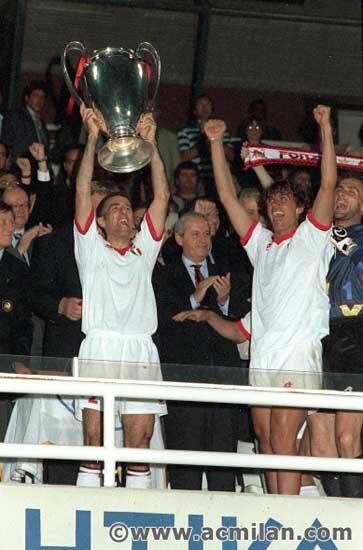
In the golden era of Italian football during the 1990s and early 2000s, the term “Sette Sorelle” — or “Seven Sisters” — was coined to describe the seven dominant clubs that regularly fought for the Serie A title.
They also made waves in European competitions, and held significant financial and political influence in the league.
This elite group came to represent the pinnacle of Italian football, with their packed stadiums, star-studded lineups, and fierce rivalries defining an unforgettable era.
Who Were the Seven Sisters?
The original Seven Sisters were:
- Juventus
- AC Milan
- Inter Milan
- Roma
- Lazio
- Parma
- Fiorentina
These clubs earned their place due to consistent domestic success, ambitious ownership, large fanbases, and — in most cases — deep runs in European competitions.
Why Were They Called the Seven Sisters?
The nickname was popularised by Italian media, especially Gianni Brera, as a way to reflect the unique status of these clubs.
In mythology and astronomy, the Pleiades — or Seven Sisters — are a group of bright stars that shine together.
In footballing terms, this label highlighted the fact that these seven clubs outshone the rest of Serie A during the 1990s, with massive spending, international players, and regular Champions League or UEFA Cup appearances.
They were financially strong, globally relevant, and featured some of the biggest stars of the time — from Roberto Baggio, Gabriel Batistuta, and Alessandro Del Piero to Ronaldo, Francesco Totti, and Hernán Crespo.
Achievements of the Seven Sisters
Juventus
- Most successful domestically: Over 30 Serie A titles
- European success: Two UEFA Champions League titles (1985, 1996)
- Known for their consistency and dominance, especially under Marcello Lippi and later during the 2010s with their nine consecutive Scudetti.
AC Milan
- 18 Serie A titles
- 7 UEFA Champions League titles (most of any Italian club)
- Under Silvio Berlusconi’s ownership, Milan became a powerhouse both in Italy and Europe, especially in the late ‘80s and early 2000s.
Inter Milan
- 20 Serie A titles
- 3 UEFA Champions League titles
- Achieved a historic treble in 2010 under José Mourinho, winning Serie A, the Coppa Italia, and the Champions League.
Roma
- 3 Serie A titles (1983, 2001, and 2022)
- They won the first Conference League
- Known more for near-misses than dominance, but boasted a golden generation with Totti, Batistuta, and Montella.
Lazio
- 2 Serie A titles (1974, 2000)
- Won numerous Coppa Italia trophies and the UEFA Super Cup in 1999. Cragnotti’s financial backing in the late 1990s turned them into title contenders.
- Winners of the last ever Cup Winners Cup
Parma
- Never won Serie A, but hugely successful in cup competitions in the ‘90s:
- 2 UEFA Cups
- 3 Coppa Italia titles
- 1 UEFA Super Cup
- Known for their talent pipeline: Buffon, Cannavaro, Thuram, Crespo, and Verón.
Fiorentina
- 2 Serie A titles (1956, 1969)
- Reached the UEFA Cup final in 1990 and had great moments under Batistuta in the 1990s.
- Their influence waned with financial troubles in the early 2000s.
What happened to the Seven Sisters? Are they still powerful?
The answer is both yes and no.
- Juventus, Milan, and Inter remain part of Italian football’s elite, with regular participation in the Champions League and dominant domestic performances. They are still the “Big Three”.
- Roma and Lazio have remained competitive but often find themselves battling for top-four finishes rather than the Scudetto.
- Fiorentina has returned to European competition in recent seasons and made the UEFA Conference League final in 2023 and 2024, but still lacks the clout of the top three.
- Parma fell hardest. Financial mismanagement led to bankruptcy in 2015. While they’ve since bounced back into Serie A, they are no longer part of the elite.
In many ways, Napoli and Atalanta have replaced Parma and Fiorentina in today’s hierarchy.
Napoli won the Scudetto in 2023 and 2025 – as well as consistently challenging in Europe. While Atalanta, under Gian Piero Gasperini, lifted the Europa League in 2024 and have been a model of sustainable success.
Legacy of the Seven Sisters
The Seven Sisters marked an era of glamour and chaos — when Serie A was the undisputed top league in the world.
Stadiums were packed, TV rights were booming, and the league attracted the world’s best talent.
But the early 2000s brought financial crises, scandals (notably Calciopoli in 2006), and the rise of the Premier League, which shifted the balance of power.
Still, the Seven Sisters remain a nostalgic symbol of a golden age — when Italian clubs ruled Europe and Serie A was the centre of the footballing world.
Conclusion
Though the balance of power has shifted, the myth of the Seven Sisters lives on.
Juventus, Milan, and Inter continue to lead the way, while Roma, Lazio, Fiorentina, and Parma remain important parts of Italian football’s rich tapestry.
The term now also serves as a reminder: Italian football, even in transition, is never far from greatness.