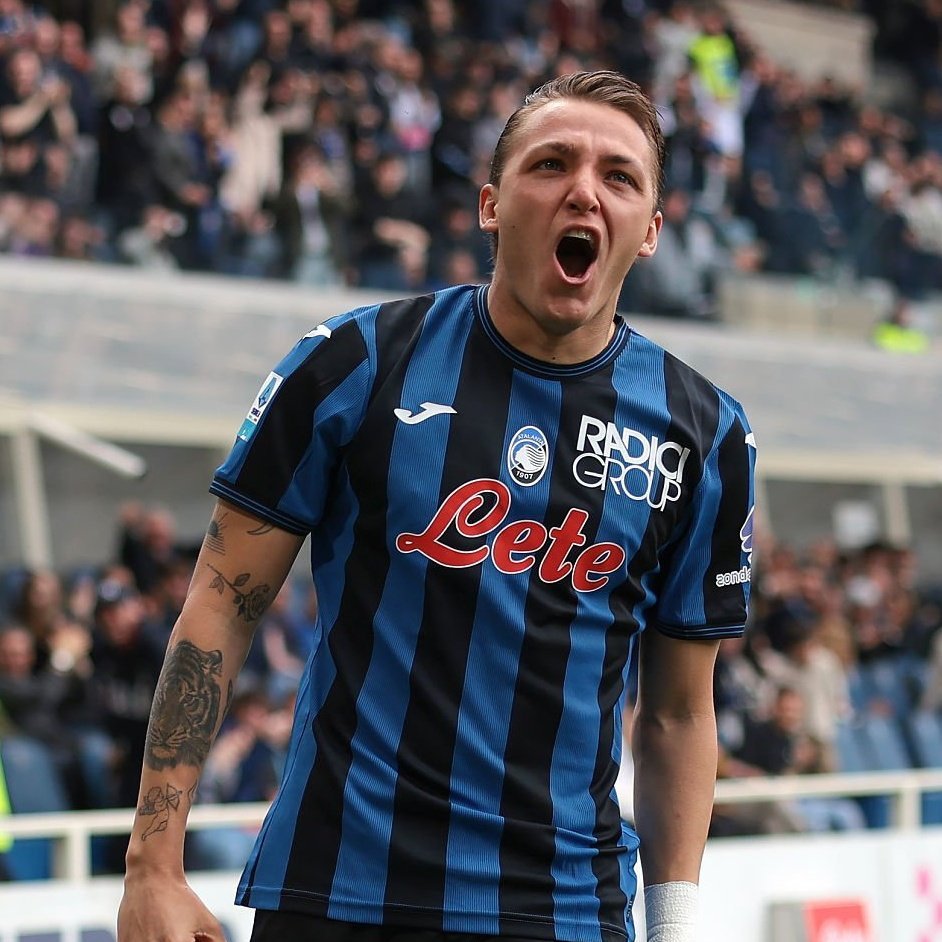
In the modern football landscape, Atalanta has emerged not only as a competitive force on the pitch but also as one of the shrewdest operators in the transfer market.
Following the sale of Mateo Retegui — who, despite his short stay in Bergamo, still commanded significant value. The club has once again proven its ability to extract maximum value while maintaining a competitive squad.
What makes Atalanta’s transfer business remarkable is the sustainable cycle of talent development, smart scouting, and timely sales.
Under sporting director Giovanni Sartori (until 2022) and then Tony D’Amico, Atalanta built a scouting network that found hidden gems, developed them into elite players under Gian Piero Gasperini, and sold them on for huge profits — often without weakening the team.
Key examples of genius transfer business:
- Rasmus Højlund
- Bought: €17m from Sturm Graz (2022)
- Sold: €75m to Manchester United (2023)
- Developed in under a year, explosive physical potential matched with strong resale value.
- Cristian Romero
- Loaned from Juventus, developed under Gasperini, then bought for €16m and sold to Tottenham for €50m in 2021. A huge profit on a short-term asset.
- Amad Diallo
- Youth product, sold to Manchester United in 2021 for €25–30m, despite limited senior appearances.
- Dejan Kulusevski
- Came through Atalanta’s youth ranks, sold to Juventus (via Parma loan) for €35m — another example of value creation from within.
- Gianluca Scamacca
- Bought: €25m from West Ham (2023)
- Key figure in 2023–24 Europa League win, and could be another high-value sale if his form continues.
- Jeremie Boga, Ruslan Malinovskyi, Robin Gosens, Remo Freuler
- All purchased for under €5–10m, then sold for significant profit after impactful spells.
A model of sustainable success
Unlike many clubs that rely on heavy investment, Atalanta reinvests wisely and trusts in youth development, data-led scouting, and Gasperini’s system, which elevates players tactically and physically. Their Zingonia training center is one of Italy’s best, nurturing both Italian and international prospects.
Atalanta’s model is particularly remarkable in the context of a provincial club from Bergamo competing against giants like Juventus, Inter, and Milan.
While others overspend, Atalanta quietly accumulates talent, competes in Europe, and continues to profit — both financially and in footballing reputation.
In a football world often defined by wasteful spending, Atalanta stands as a case study in modern club management, where vision, patience, and intelligence deliver not just trophies — like the 2024 UEFA Europa League title — but long-term sustainability and global respect.
Gasperini’s exit marks the end of an unforgettable era — arguably the greatest in Atalanta’s history — but the club has been building for sustainability.
While fans are understandably emotional and cautious, there’s a sense that this isn’t a collapse, but a new chapter.
If Ivan Jurić respects the identity Gasperini built while adding fresh ideas, Atalanta can remain a force — in Italy and in Europe.