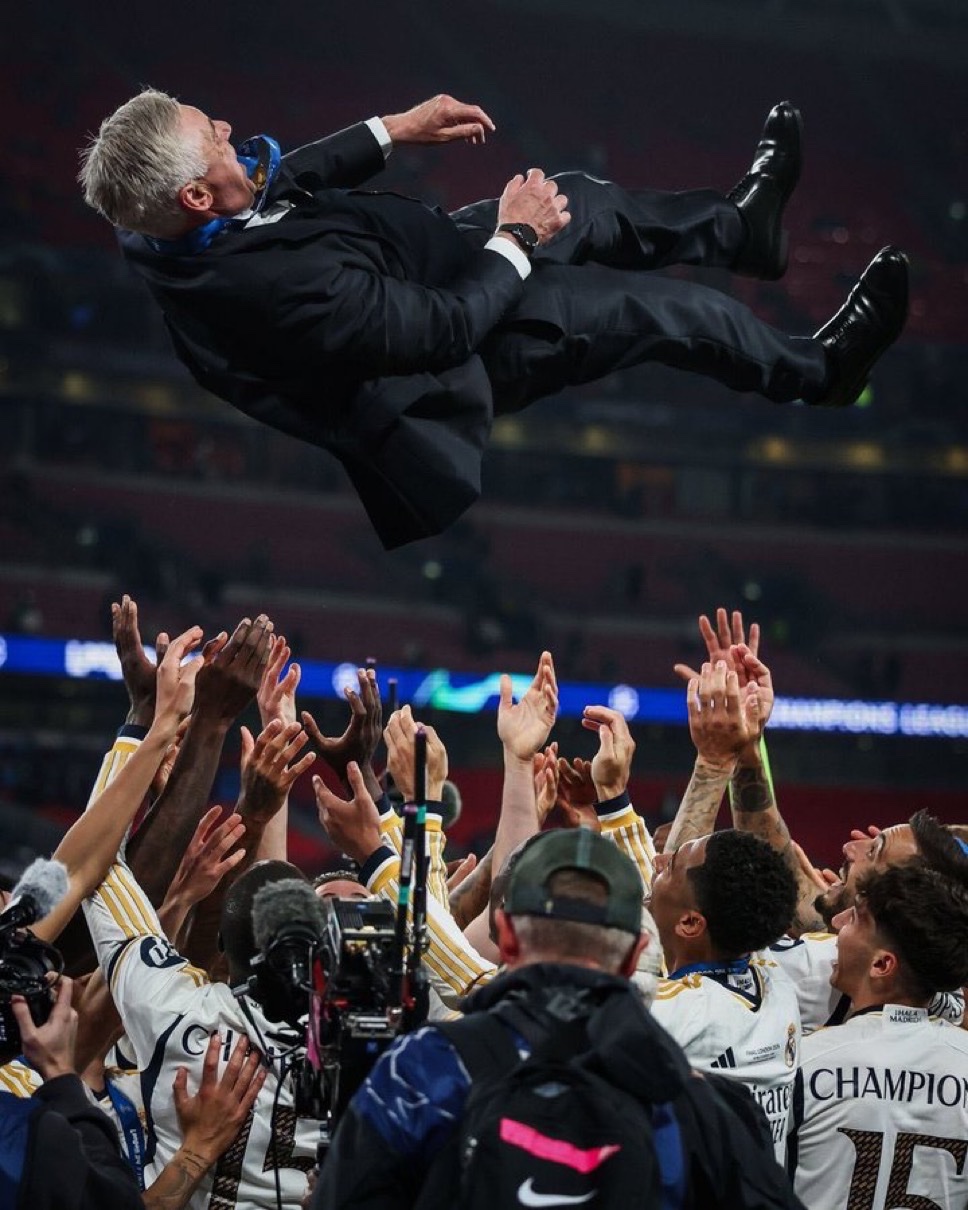
Italian footballers and managers have a long and varied history with Spanish football — a relationship marked by both glittering success stories and high-profile disappointments.
While Italy’s domestic game has long been revered for its tactical discipline and defensive mastery, Spain’s La Liga represents flair, technical brilliance, and a fast-paced attacking ethos.
This contrast has made the migration of Italians to Spain a fascinating case study in adaptation, ambition, and cultural exchange.
Italian players in Spain: Stars and stumbles
Over the decades, several Italian players have tested themselves in Spain, but only a few have truly flourished.
Christian Vieri made a big impression at Atlético Madrid in the 1997–98 season, scoring 24 goals and winning the Pichichi Trophy as La Liga’s top scorer — a rare and impressive feat for an Italian striker abroad.
Fabio Cannavaro had a solid, if not spectacular, stint at Real Madrid, winning back-to-back La Liga titles (2006–2008) and the Ballon d’Or in 2006 — partly due to his World Cup heroics with Italy.
However, many Italians have struggled to replicate their Serie A form in Spain. Francesco Coco and Antonio Cassano, despite their talent, failed to make a lasting impact at Barcelona and Real Madrid respectively, often due to fitness, form, or disciplinary issues.
More recently, players like Patrick Cutrone and Moise Kean briefly appeared in Spain but left little mark.
In contrast, Francesco Totti, Del Piero, and Maldini stayed loyal to their Italian clubs, with offers from Spanish giants often turned down — reinforcing the idea that Italy’s biggest stars were more likely to remain domestic icons rather than La Liga legends.
Italian players in La Liga
Many Italians have featured in Spain’s top division over the years. A comprehensive list includes players such as:
- Christian Vieri — Atlético Madrid (1997–98), won the Pichichi Trophy with 24 goals.
- Fabio Cannavaro — Real Madrid (2006–09), helped win two La Liga titles.
- Gianluca Zambrotta — Barcelona (2006–08), logged 58 league appearances and scored three goals.
- Demetrio Albertini — Atlético Madrid & Barcelona (early 2000s), brief role at Barça before retiring after a La Liga title season.
- Thiago Motta (born in Brazil but represented Italy) — Barcelona & Atlético Madrid (2001–08), won domestic and European honours in Spain.
Other notable names include: Amedeo Carboni (Valencia), Marco Di Vaio, Bernardo Corradi, Stefano Fiore, Emiliano Moretti, Enzo Maresca, Giuseppe Rossi, Nicola Sansone, Cristiano Piccini, Roberto Soriano, Alessio Tacchinardi, Salvatore Sirigu, Ciro Immobile, Alessandro Florenzi, Patrick Cutrone, Daniele Bonera, Christian Abbiati, Federico Barba, and Matteo Gabbia, among others.
Early pioneers included Aridex Calligaris (Real Sociedad, 1949–50), Sergio Del Pinto (Lleida), and Angelo Bollano(Murcia) in the early 1950s — none of whom made a lasting impact.
Recent players such as Cristiano Piccini (Betis, Valencia) and Federico Barba (Valladolid) also featured in the 2010s and early 2020s.
Italian managers in Spain: Tactical influence and mixed fortunes
On the managerial front, Italian coaches have found a warmer reception. Fabio Capello famously led Real Madrid to two La Liga titles (1996–97, 2006–07), despite facing criticism for his pragmatic style that clashed with Madrid’s attacking tradition.
His success proved that Italian tactical discipline could win trophies in Spain, even if not always adored by fans.
Carlo Ancelotti, meanwhile, has been one of the most successful and popular Italian managers in Spain.
In his first spell with Real Madrid (2013–15), he won the long-awaited La Décima — the club’s 10th Champions League title — along with a Copa del Rey and FIFA Club World Cup.
He returned in 2021 (before leaving this summer) and won La Liga again in 2021–22 and the Champions League, cementing his legacy as one of the most respected foreign coaches in Spanish history.
Other Italian managers, like Arrigo Sacchi, had brief and less successful stays. Sacchi struggled at Atlético Madrid in the late ’90s, finding it difficult to impose his philosophy in a different footballing culture.
Why do Italians go to Spain?
For Italian players and managers, Spain offers several key attractions:
- Higher visibility and prestige, especially with global giants like Real Madrid and Barcelona.
- Better financial packages and marketing opportunities.
- A more open and attacking style of football, which appeals to technically gifted players looking for more creative freedom.
- Cultural proximity, with both countries sharing Mediterranean roots, language similarities, and a deep footballing tradition.
Is it easy for Italians to adapt?
Adaptation is not always smooth. The Spanish game’s faster tempo, higher pressing, and less reliance on tactical rigidity can be a shock to those raised on catenaccio or structured defensive systems.
Players who thrive on creativity and movement — such as Vieri or Ancelotti’s Real Madrid stars — adapt better.
However, more conservative or tactically rigid players often struggle to meet La Liga’s fluid demands.
Moreover, the media scrutiny in Spain, particularly around Real Madrid and Barcelona, can be intense.
Italians accustomed to the pressure of Serie A are no strangers to this, but the cultural expectation for entertaining football in Spain can lead to clashes in philosophy, especially for Italian managers.
Conclusion: A complex but rich relationship
The story of Italians in Spain is one of both brilliance and difficulty. While managers like Ancelotti and Capello have conquered La Liga with their adaptability and tactical knowledge, Italian players have found success far less frequently.
The challenge lies not in talent, but in adapting to a different rhythm, culture, and expectation of the game. Still, the allure of Spanish football remains strong — and for those who can adjust, Spain offers a stage on which Italian excellence can shine anew.