Italy and Argentina share one of the deepest footballing connections in the world. Millions of Argentinians trace their ancestry back to Italy, and the two countries have long exchanged tactical ideas, players, and cultural influences.
Yet while Argentine stars have famously shone in Serie A, far fewer Italians have made the reverse journey.
The Italians who have played or managed in Argentina form a small but fascinating group—pioneers navigating passion, pressure, and one of the world’s most intense football environments.
Why Italians Go to Argentina
Unlike moves to other European leagues, transfers from Italy to Argentina are relatively rare.
Those who go often do so for unique reasons: dual nationality, family roots, or the desire to experience the South American style firsthand.
For some, it’s about reconnecting with heritage; for others, it’s the search for game time or a fresh challenge.
Argentina’s league, known for its technical flair, fierce rivalries, and vibrant atmospheres, provides a very different test from the tactical chessboard of Serie A.
Italians Who Became Stars in Argentina
Historically, a handful of Italian-born players achieved success in Argentina, especially in the early 20th century.
During football’s formative years, many Italians emigrated to Buenos Aires and became local legends.
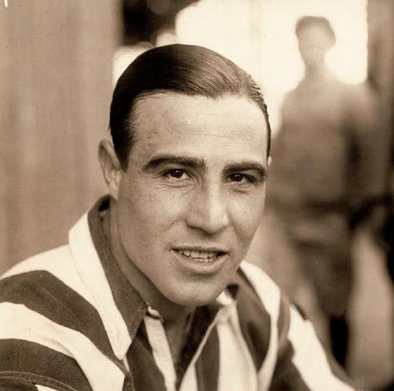
Players like Enrico Guaita, who was born in Argentina to Italian parents but later represented Italy, epitomised this cultural bridge—starring for Estudiantes before moving to Roma and returning to Argentina after his playing days in Italy.
In more modern times, truly Italian-born players rarely became major stars in Argentina.
However, several dual-nationality Italians, such as Mauro Camoranesi—born in Argentina but an Italy international—played in the Argentine league before shining in Serie A and with the Azzurri.
His early years at Banfield and Cruz Azul (Mexico) showed how Argentine and Italian football philosophies can blend seamlessly.
Adapting to Argentine Football
For Italians, adapting to Argentine football can be both exhilarating and challenging. The Argentine Primera División is fast-paced, emotional, and unpredictable.
Matches are often played in intense atmospheres, where fans demand attacking football and visible passion.
Italian players accustomed to slower, tactical games must adjust to a more open, improvisational style.
However, Italians generally find Argentina culturally familiar. The shared language roots (Spanish and Italian share many similarities), Mediterranean temperament, and common traditions in food and family make off-pitch life easier than in many other foreign leagues.
Players Who Struggled
Despite the cultural closeness, many Italians struggled to adapt to Argentina’s football intensity.
Those who came expecting the structured, tactical rhythm of Serie A often found the Argentine league chaotic and emotionally charged.
Defenders and goalkeepers, in particular, have found it tough to cope with the unpredictable play and the demanding crowds.
Examples include several lower-league Italian imports in the 1980s and 1990s who failed to make a lasting impression—often due to differences in playing philosophy, physical demands, and club instability.
The lack of long-term Italian stars in modern Argentine football reflects these adaptation challenges.
Italian Coaches in Argentina
On the managerial front, Italy’s influence has been subtle but present. The most notable Italian coach in Argentina was Helenio Herrera—born in Buenos Aires to Spanish parents but raised and educated in Italy.
He managed in both countries and became famous for developing “catenaccio,” a tactical system that influenced football worldwide.
Though his major success came in Italy with Inter, his early Argentine experiences shaped his understanding of discipline and mentality.
In later years, a few Italian coaches and technical directors, such as Giuseppe Sannino and Gian Piero Gasperini, have expressed admiration for Argentine football’s tactical evolution, though none have had extended tenures managing in the country. Italian coaching methods, however, have indirectly influenced many Argentine managers, from Carlos Bilardo to Diego Simeone, who have cited Italian football as an inspiration for their own tactical philosophies.
Conclusion
The Italian presence in Argentina may be limited in numbers, but its impact is profound.
Shared history, cultural kinship, and footballing philosophy bind the two nations in a unique relationship. Italian players who have gone to Argentina have faced both the beauty and brutality of South American football—passion, unpredictability, and immense pressure.
While few Italians have become true stars in Argentina, their experiences highlight the strong yet complex bond between two footballing cultures built on creativity, tactics, and emotion.
Ultimately, whether on the terraces of Buenos Aires or the streets of Rome, the Italian and Argentine football stories remain intertwined—two sides of the same passionate, beautiful game.