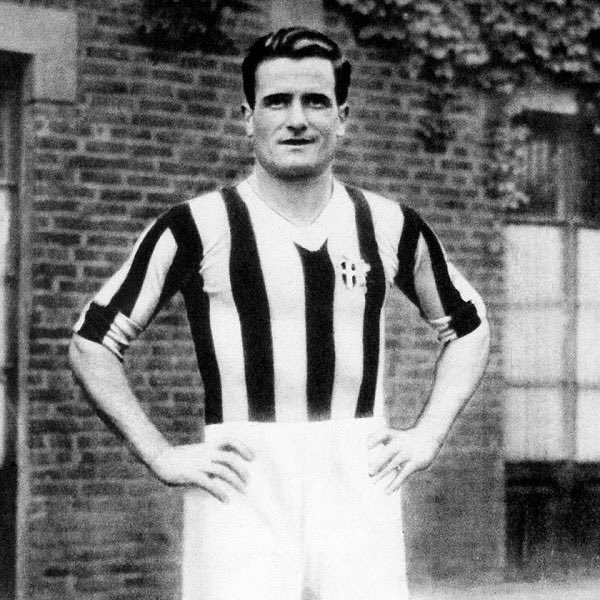
The story of Argentinian oriundi – players of Italian descent who represent Italy. It is deeply woven into the history of both countries.
Starting in the early 20th century, mass migration from Italy to Argentina created strong familial and cultural ties between the two nations.
As a result, Argentina became home to one of the largest Italian diasporas in the world. These connections would later shape the course of Italian football.
Origins of the oriundi tradition
The term “oriundo” (plural: oriundi) refers to a player born outside Italy, typically in South America, who qualifies to play for Italy through Italian ancestry. Italian football authorities embraced this concept as early as the 1930s, using it to bolster the national team with foreign-born talent of Italian blood.
The most famous early example is Luis Monti, who played for Argentina in the 1930 World Cup final and then for Italy in 1934 – helping the Azzurri win their first World Cup under coach Vittorio Pozzo.
He was joined by fellow Argentines Enrique Guaita and Raimundo Orsi, key figures in Italy’s 1934 triumph. This set a precedent for decades to come, blending Argentine flair with Italian tactical discipline.
Key Oriundi Who Represented Italy
1930s:
- Luis Monti – Midfield general, played World Cup finals for both Argentina (1930) and Italy (1934).
- Raimundo Orsi – Winger, instrumental in Italy’s 1934 World Cup win.
- Enrique Guaita – Scored the semi-final winner in the 1934 World Cup.
2000s–2020s:
- Mauro Camoranesi – Born in Tandil, Argentina, Camoranesi became a cult hero for Italy, playing a vital role in the 2006 World Cup-winning squad.
- Daniel Osvaldo – A flamboyant striker who played for Roma and represented Italy under Cesare Prandelli.
- Ezequiel Schelotto – Born in Buenos Aires, he earned caps for Italy and played for clubs like Atalanta and Inter.
- Mateo Retegui – Called up by Roberto Mancini in 2023 despite never playing club football in Italy at the time, showcasing the ongoing relevance of the oriundi pathway.
Argentine Stars in Serie A (non-oriundi)
Even outside of those who played for Italy, Serie A has long been a favoured destination for Argentine talent:
- Diego Maradona (Napoli) – Perhaps the most iconic player in Serie A history, Maradona led Napoli to two Scudetti and a UEFA Cup, becoming a godlike figure in Naples.
- Gabriel Batistuta (Fiorentina, Roma) – One of Serie A’s most feared strikers, winning the title with Roma in 2001.
- Hernán Crespo (Parma, Lazio, Inter, Milan) – Prolific goalscorer who thrived across several Italian clubs.
- Javier Zanetti (Inter) – Long-serving captain, symbol of professionalism, and part of Inter’s 2010 treble-winning team.
- Paulo Dybala (Palermo, Juventus, Roma) – A modern-day artist on the pitch, still lighting up Serie A with his vision and finesse.
- Juan Sebastián Verón (Lazio, Inter) – Elegant midfielder, part of Sven-Göran Eriksson’s Lazio title-winning side in 2000.
- Ángel Di María (Juventus) – Spent a season in Turin, adding another chapter to Argentina’s Serie A legacy.
- Lautaro Martínez (Inter) – A key figure in Inter’s recent success, including the 2020–21 Scudetto and 2023 Champions League final.
Cultural and Tactical Impact
The Argentine influence has shaped Serie A stylistically and emotionally — combining South American creativity with Italian structure. Whether as oriundi wearing the Azzurri shirt or as foreign icons elevating the domestic league, Argentinians have given Italian football some of its most unforgettable moments.
The oriundo tradition remains a powerful symbol of shared heritage — and of how football often reflects deeper histories of migration, identity, and belonging.