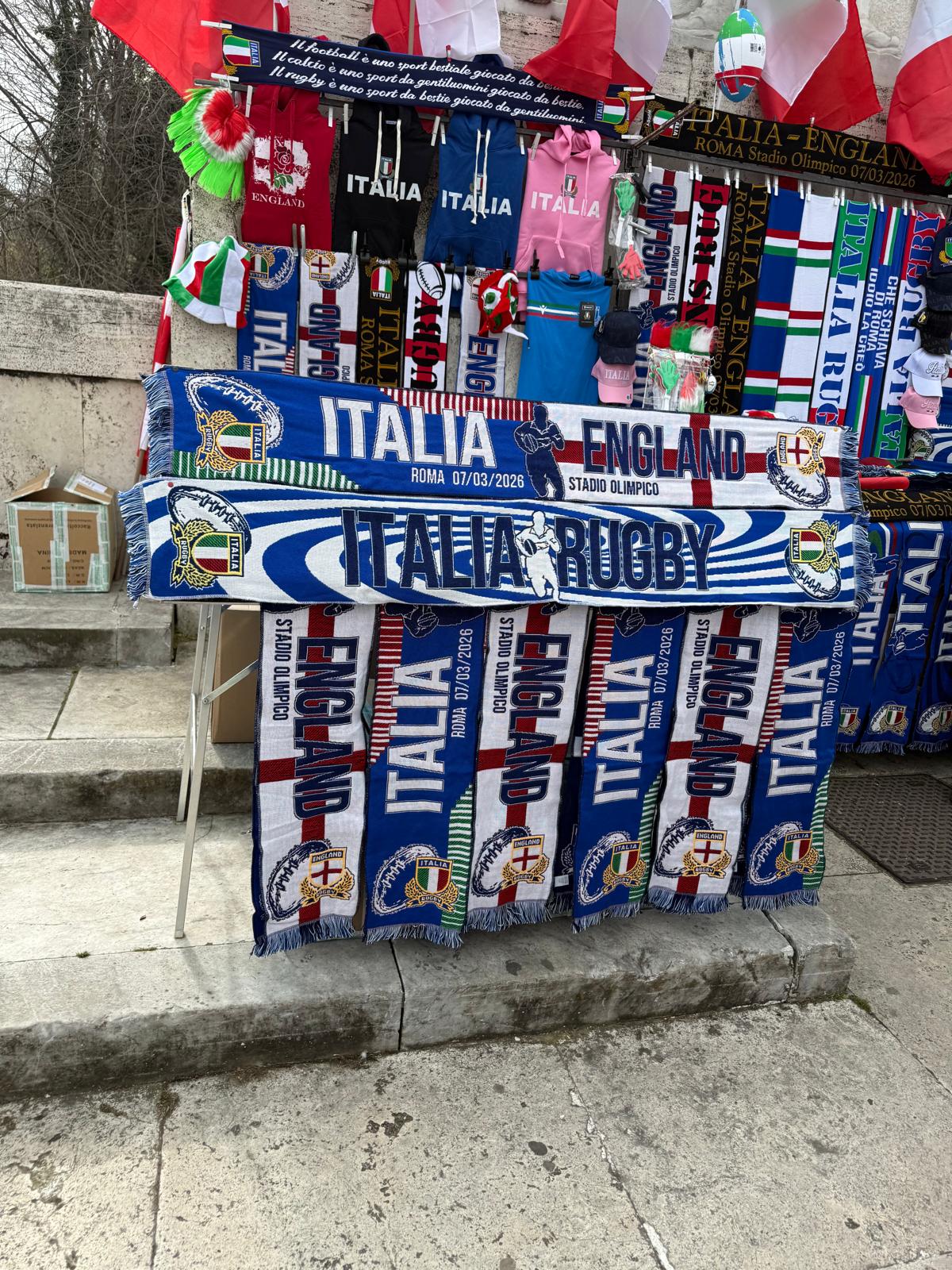
If sport has unwritten rules, then few accessories spark stronger reactions than the half-and-half scarf.
Walk past any major stadium on matchday and you’ll see them hanging from stalls: two teams awkwardly stitched together, colours colliding in uneasy harmony, sold as the perfect souvenir for tourists and neutral fans.
They’re now common not only at football matches but across major sporting events. Cup finals, international tournaments, rugby tests, and even boxing nights all seem to have their own version of the half-and-half scarf.
But among traditional supporters – particularly in football – they remain one of sport’s most controversial souvenirs.
So when did these scarves appear, why are they so divisive, and are they ever socially acceptable?
When did half-and-half scarves begin?
Scarves themselves have been part of supporter culture for more than a century. In Britain they became common in the early 20th century as fans wore club colours during cold winter matches.
The half-and-half scarf, however, is much more recent.
They began appearing in the late 1990s and early 2000s as football became increasingly global.
Big events such as Champions League ties, international matches, and domestic cup finals created an opportunity for street vendors to sell souvenirs that commemorated the specific fixture.
Rather than choosing between two clubs, the scarf simply combined them both: Team A vs Team B – Matchday Souvenir.
It was clever from a business perspective. Visiting fans, neutrals, tourists, and corporate guests suddenly had a keepsake that marked the event itself rather than just one team.
But football supporters were never entirely convinced.
Why football fans dislike them
Football loyalty is tribal.
You wear your colours. Not your opponent’s.
To many supporters – especially in Europe and South America – a scarf that mixes two rival clubs feels fundamentally wrong. It blurs the lines of allegiance and turns something symbolic into something commercial.
In Italy’s ultra culture, the concept is particularly unpopular. The scarf is a badge of identity, not a souvenir. Combining colours from opposing teams can feel like diluting the very idea of belonging.
There’s also the authenticity issue. Most half-and-half scarves are not produced by clubs themselves but by independent vendors outside stadiums. They’re designed for visitors rather than hardcore fans.
To traditional supporters, that alone makes them suspect.
Are they acceptable at other sporting events?
Interestingly, outside football the reaction is often very different.
At rugby internationals, for example, half-and-half scarves seem far more socially acceptable. Rugby crowds tend to have a more mixed atmosphere, with rival fans often sitting together and sharing drinks before and after the match.
Because the culture is less tribal than football, a half-and-half scarf can feel like a celebration of the occasion rather than a betrayal of allegiance.
You’ll often see them at Six Nations games, Rugby World Cup matches, and major test series. Fans might still wear their national colours, but buying a scarf that commemorates the fixture doesn’t carry the same stigma.
In football, however, the cultural rules are much stricter.
A Six Nations dilemma
I found myself facing exactly that debate earlier this year at Italy vs England in the Six Nations at the Stadio Olimpico in Rome.
Walking past the vendors outside the ground, I actually thought it might be one of the rare occasions where buying a half-and-half scarf would be acceptable. After all, it was an international rugby match rather than a club rivalry.
My nephew and brother-in-law shut that idea down immediately.
‘No way.’
My nephew then joked that he’d rather own a Roma vs Lazio half-and-half scarf – which is something I’m fairly certain doesn’t exist and probably never will. In Rome, that would be about as close to sporting sacrilege as you could get.
Ironically, my nephew does have previous form.
At the 2019 FA Cup Final between Watford and Manchester City, he bought a half-and-half scarf outside Wembley. Watford were hammered 6–0 that afternoon, and I remember feeling slightly dirty watching him hand over the money for it.
At the time he loved the souvenir. These days, I suspect he’s slightly embarrassed he ever bought it.
Clubs pushing back
Some clubs have even started pushing back against the trend.
West Ham United, for example, have moved to ban half-and-half scarves from being sold around the London Stadium. The club argued that they undermine traditional supporter culture and can create tensions between rival fans.
It’s a small gesture, but one many old-school supporters welcomed.
In a football world that sometimes feels increasingly commercialised, defending traditions – however small – still matters to fans.
Conclusion: A Souvenir That Divides Sport
Half-and-half scarves probably aren’t going anywhere. Vendors will continue selling them outside stadiums and tourists will keep buying them as matchday souvenirs.
At rugby internationals and other major sporting events, they’re generally accepted as a harmless reminder of the occasion.
In football, however, the debate is unlikely to disappear.
For many supporters, the rule is simple: one club, one colour, one scarf.
Personally, I’m firmly in that camp.
Because while a Six Nations half-and-half scarf might just about pass the social test, a Roma-Lazio version probably wouldn’t survive five minutes outside the Olimpico.
And rightly so.
Would you ever buy a half-and-half scarf?