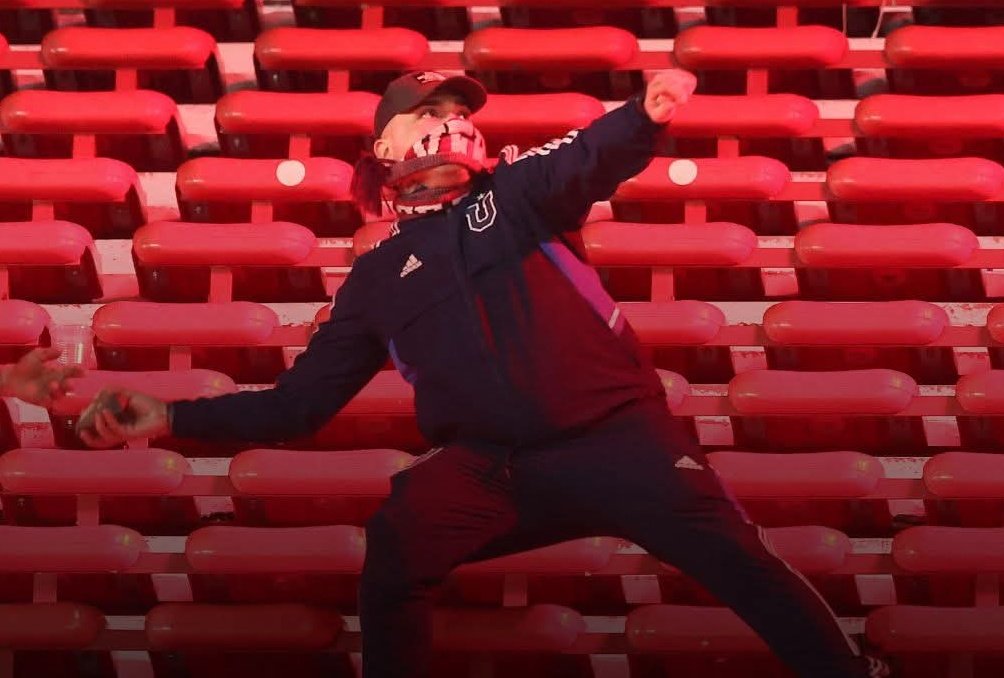
Wednesday’s Copa Sudamericana last-16 second-leg between Independiente de Avellaneda and Universidad de Chile ended in chaos.
What began as a tense, competitive tie quickly collapsed into violence. Officials had no choice but to suspend the game, sparking serious concerns over safety, policing, and fan protection at one of South America’s biggest stadiums.
The scene unfolds
The match took place at Avellaneda’s Estadio Libertadores de América. Just two minutes into the second half, fighting broke out.
Fans hurled stones, sticks, bottles, and even stadium fixtures from the upper tiers—where Chilean supporters stood—down toward Independiente fans below.
Independiente’s barra brava stormed the visiting section. They attacked, stripped, and brutalized rival supporters. In the chaos, at least one fan fell—or jumped—from the stands in sheer terror.
Police and security failures
Witnesses and media condemned the security forces.
Despite thousands of visiting fans in the upper stands, police barely showed a presence inside. Most officers stayed at ground level, leaving supporters exposed. Their failure to intervene quickly allowed the violence to spiral out of control.
Human toll and aftermath
The clashes injured at least 10 to 20 people. Several suffered serious wounds. One victim, Gonzalo Alfaro, remains in critical condition after reportedly being pushed from the stands.
Police detained more than 100 people—some reports suggest up to 300—mostly Universidad de Chile supporters. Many were chased and arrested near Puerto Madero after fleeing the stadium.
Chilean President Gabriel Boric condemned the violence as an “unacceptable lynching.” He sent Interior Minister Álvaro Elizalde to Argentina to support the injured and detained.
CONMEBOL’s decision and the blame game
CONMEBOL cancelled the match immediately, citing a “lack of security guarantees.” Its disciplinary committee will now investigate. Sanctions could include fines, match forfeits, or expulsion from future tournaments.
Independiente’s leadership blamed Chilean fans for provoking the violence and damaging the stadium. Universidad de Chile responded by demanding accountability from organizers, insisting that safety failures overshadow any sporting issue.
Conclusion
What should have been a thrilling South American clash instead turned into one of the region’s darkest football nights.
Extreme violence, a shocking security collapse, and deep human suffering left scars far beyond the pitch. Now CONMEBOL must act—not just to punish—but to prove it can protect fans and preserve the integrity of the game.