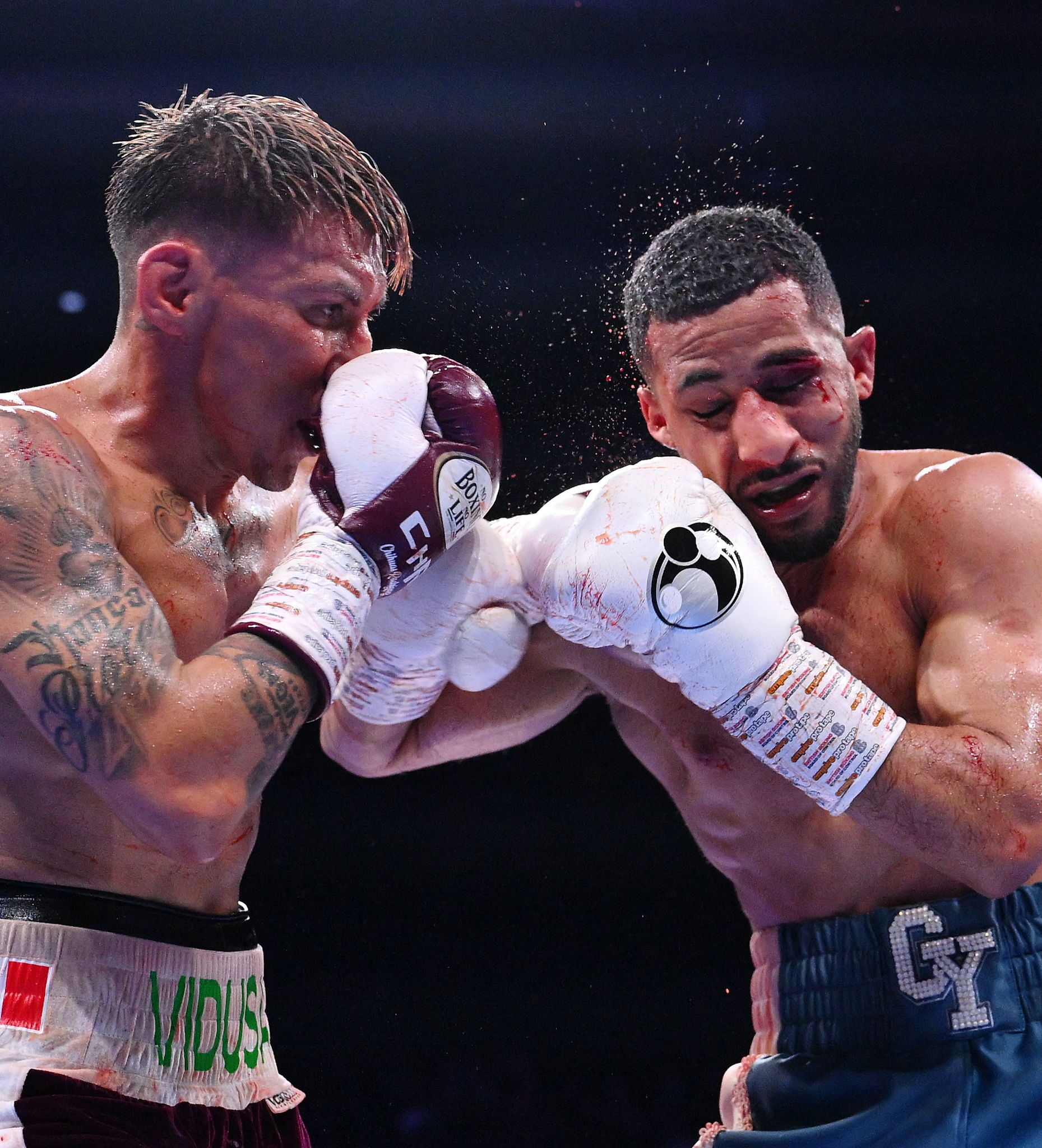
Francisco Rodríguez Jr., the seasoned Mexican boxer and former world champion, has recently found himself at the centre of a major doping scandal that has cast a shadow over his career.
Following his impressive victory over Olympic gold medallist Galal Yafai in June 2025—a performance hailed by many as a career-defining win—Rodríguez tested positive for heptaminol, a banned cardiac stimulant.
This was not an isolated incident; it later emerged that he had also failed a drug test in December 2024, shortly after a bout against Josue Jesús Morales.
Despite the serious nature of two failed tests within six months, the World Boxing Council (WBC) controversially ruled that Rodríguez’s ingestion of the substance was unintentional, overturning the Yafai result to a no contest but stopping short of issuing a suspension.
The scandal has sparked widespread backlash within the boxing community, raising serious concerns about doping enforcement, fighter safety, and the credibility of regulatory bodies in the sport.
Failed drug tests: Timeline and key findings
- June 21, 2025 – Yafai Fight
After Rodríguez’s unanimous decision win over Galal Yafai in Birmingham—where he landed a CompuBox-record 575 punches—the Voluntary Anti-Doping Association (VADA) flagged his urine “A”-sample for heptaminol, a banned cardiac stimulant. This result was confirmed to Matchroom Boxing, the WBC, and the BBBofC.
- December 2024 – Morales Bout
Rodríguez had also previously failed a drug test following a December bout against Josue Jesús Morales in San Antonio. Although initially recorded as a win, the Texas Commission later overturned the result to a no contest, and penalized him with a 90-day suspension and a $500 fine.
Official Ruling & Controversy
- On July 27, 2025, the WBC concluded that Rodríguez’s ingestion of heptaminol was “accidental, unintentional, unknowing, and not directed to enhance performance.” They overturned the Yafai fight result to a no contest, reinstated Yafai as interim champion, and ordered an immediate rematch. Rodríguez was placed on 12-month probation, required to fund regular testing and join a WBC education program.
- WBC notably did not impose a suspension, a decision heavily criticized given the severity of two consecutive failed tests.
Eddie Hearn’s Response
Promoter Eddie Hearn—on behalf of Yafai—strongly condemned the ruling:
- He revealed Rodríguez’s prior failed test in December, questioning the WBC’s eligibility criteria for their eliminator bout.
- Hearn called the expedited process (“two weeks to adjudicate without B-sample confirmation”) and the lack of a meaningful penalty “bizarre” and “mental.” Yafai feels he should be the mandatory challenger without fighting Rodríguez again.
Implications & Concerns
- Credibility at Stake: Rodríguez’s performance—marked by relentless pace and stamina—now appears tainted in retrospect, especially given commentators like Sunny Edwards had voiced skepticism during the fight broadcast.
- Systemic Issues: This case follows a similar doping scandal involving Rodríguez’s stablemate Jaime Munguía, signalling broader scrutiny of authorisation and oversight within Eddy Reynoso’s team.
- Athlete Welfare & Enforcement: Observers argue that boxing needs more consistent and stringent penalties to deter doping, given the risk of long-term physical and psychological harm to fighters.
Final thoughts
Francisco Rodríguez Jr. now faces a deeply compromised legacy—two consecutive bouts invalidated over doping allegations.
Despite the WBC’s determination that the ingestion was unintentional, the absence of meaningful suspension and presence of back-to-back violations raise serious questions about both fighter responsibility and institutional enforcement.
The pending rematch looms large, but trust—especially from Galal Yafai and his team—is in a difficult situation.
Many in the boxing world believe stronger, clearer accountability is important to preserve both safety and integrity.