
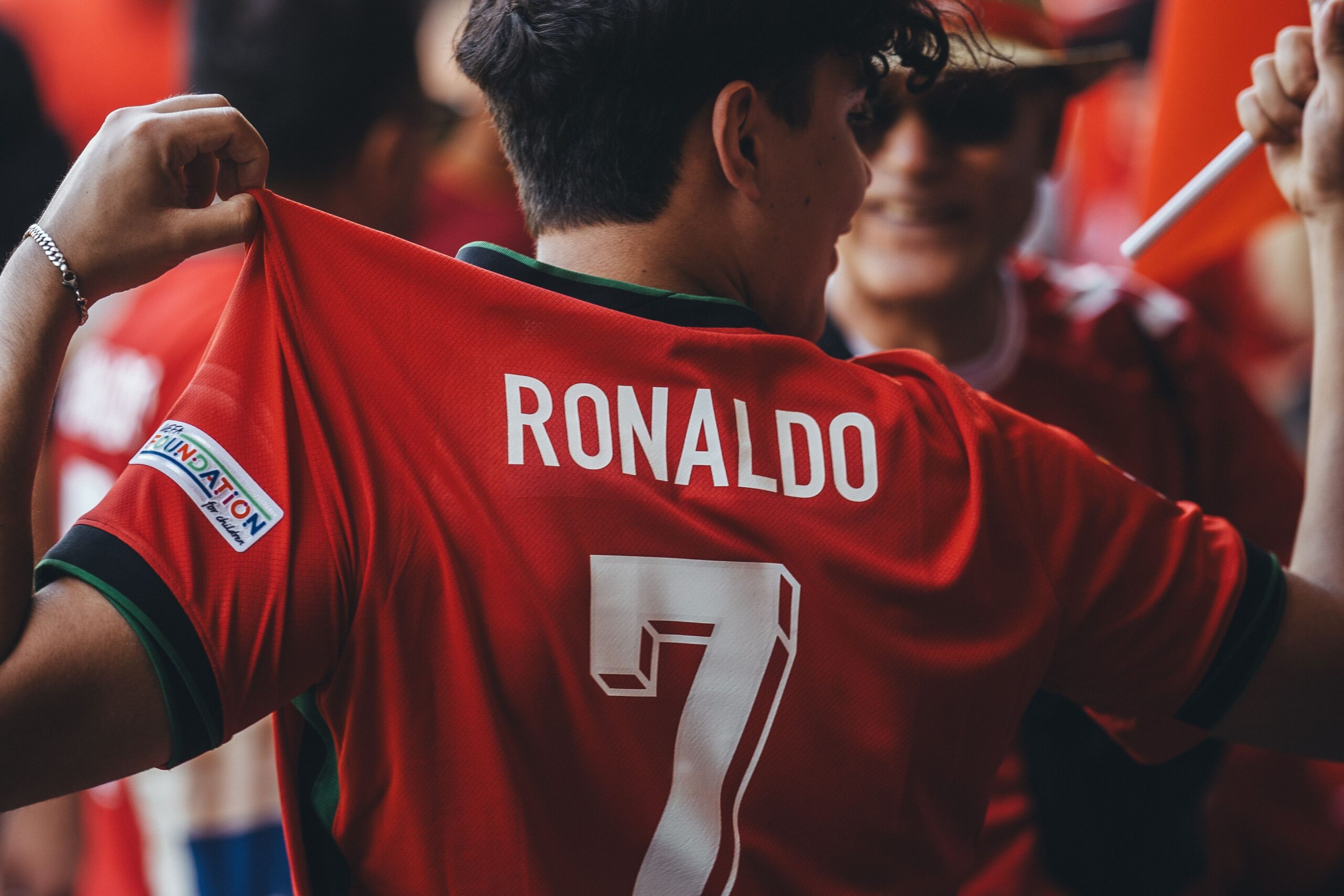
An ode to greatness, written by someone who was eight years old when it all began, and 31 when the world witnessed the end of an international era.
Some footballers are remembered for their goals. Some for their trophies. Some for the moments that become immortalised in the history of the game.
And then there is Cristiano Ronaldo.
For me, this isn’t simply an article about a footballer. It is a love letter to a man who made football feel magical, who made impossible things look routine, and who gave an entire generation a reason to believe that greatness could be achieved through nothing but talent, obsession, sacrifice and an almost supernatural determination to be the best.
I was eight years old when I first witnessed the beginning of something extraordinary. I am 31 now, and I have spent almost my entire life watching a man redefine what it means to be a footballing superstar.
What follows is not just a celebration of his career. It is a celebration of a childhood, a generation, and a phenomenon that transcended football.
August 2003: The beginning of something beautiful
On August 16, 2003, an 18-year-old Cristiano Ronaldo stepped onto the pitch at Old Trafford for Manchester United against Bolton Wanderers.
Manchester United had just signed a relatively unknown Portuguese teenager from Sporting for approximately £12.24million. Sir Alex Ferguson had seen enough during a pre-season friendly to believe that this boy possessed something special. What followed was a substitution that would change football forever.
The crowd didn’t simply see a footballer enter the game. They saw something different.
The stepovers. The acceleration. The audacity to take on defenders. The confidence of a teenager who seemed entirely unaware that he was supposed to be intimidated by the biggest stage in English football.
I was eight years old, watching the ITV Highlights, hearing my brother laughing at the amount of tricks Manchester United’s new No 7 was doing, attacking the Stretford End with flamboyance and flair.
I couldn’t possibly have understood what I was watching. I didn’t know this is what five Ballon d’Ors could start like. I didn’t know what a Champions League legacy looked like. I certainly couldn’t have imagined that the boy in that Manchester United shirt would become one of the most recognisable human beings on the planet.
But there was something about him.
Something that made you watch. Something that made you wait for the ball to reach his feet. Something that made football feel exciting in a way that was difficult to explain.
And that was only the beginning.
2008: The season that immortalised a superstar
If there is one season that perfectly captures the transformation of Ronaldo from prodigy into footballing royalty, it is 2007-08.
This was the season the world stopped asking whether Ronaldo was the best player in football and started acknowledging that he might be.
Thirty-one Premier League goals.
Forty-two goals in all competitions.
A Premier League title.
A Champions League title.
A European Golden Shoe.
And a Ballon d’Or that confirmed what millions had already come to believe.
The football was breathtaking.
The free-kicks that seemed to defy physics. The headers that made defenders look helpless. The acceleration that left opponents desperately reaching for him. The celebrations that became instantly recognisable.
There was an arrogance to his brilliance, but it was an arrogance backed by extraordinary work.
He wasn’t simply gifted. He was obsessed.
And on May 21, 2008, in Moscow, he produced one of the defining images of his career.
A towering header against Chelsea in the Champions League final.
Ronaldo rising above everyone else, hanging in the air, sending the ball beyond Petr Cech.
For a moment, it felt like the entire season had been distilled into one photograph.
United would eventually win on penalties, despite Ronaldo missing his own spot-kick. He cried after the final whistle, overwhelmed by the significance of what he had achieved.
That was the beauty of him.
The superhero could be vulnerable, too.
And somehow, that made him even more extraordinary.
Five Ballon d’Ors: A career built on refusing to stop
Five Ballon d’Or awards.
Five occasions when Cristiano Ronaldo stood above the world’s greatest footballers and received individual recognition for a level of excellence that seemed almost impossible to sustain.
2008.
2013.
2014.
2016.
2017.
Each one represented a different chapter of his evolution.
At Manchester United, he became a phenomenon. At Real Madrid, he became a machine.
Four hundred and fifty-one goals in 438 competitive appearances for Madrid. Four Champions League titles during his time there. A rivalry with Lionel Messi that elevated both men and transformed an entire era of football into something we may never experience again.
And while people argued about who was better, Ronaldo simply kept scoring.
He kept winning.
He kept breaking records.
He kept making the extraordinary feel ordinary.
There is something deeply moving about watching a player refuse to accept that his best days must inevitably be behind him.
Ronaldo’s career became an endless argument against the limitations of age, expectation and conventional wisdom.
£80million: A bargain, even in 2009
When Real Madrid paid Manchester United £80m for Ronaldo in 2009, the world collectively lost its mind.
It was a world-record transfer. An astronomical fee. A sum that felt almost ridiculous at the time, particularly as the world was emerging from a financial crisis.
But looking back, wasn’t it a bargain?
Actually, £80m might have been one of football’s greatest investments.
Real Madrid weren’t buying a winger. They weren’t buying a goalscorer. They weren’t even buying a five-time Ballon d’Or winner, because four of those awards were still to come.
They were buying a phenomenon.
They were buying a footballer who would score 451 goals in 438 appearances for their club. They were buying a man who would help them conquer Europe repeatedly. They were buying an icon who would make their shirt one of the most recognisable garments in world sport.
They were buying Cristiano Ronaldo.
And in retrospect, £80m seems almost laughable.
The transfer wasn’t simply the acquisition of a player. It was the acquisition of an era.
Portugal: The country the world fell in love with
Perhaps the most beautiful part of Ronaldo’s legacy isn’t even what he achieved at club level.
It’s what he did for Portugal.
Before Cristiano Ronaldo became a global superstar, Portugal was respected in football. It had its legends, its traditions, its great players. Eusebio. Luis Figo. Rui Costa.
But Ronaldo took Portugal to an entirely different level of global visibility.
Suddenly, people who had never watched a Portuguese league match were following Portugal’s national team.
People who couldn’t point to Madeira on a map were learning about the island where Cristiano was born.
People were buying Portugal shirts, watching their matches, following their players, and emotionally investing in a nation because of one man.
He became the face of Portuguese football.
And eventually, he became the captain who led Portugal to their first major international trophy at Euro 2016, before adding the Nations League in 2019 and 2025.
That Euro 2016 final will forever be one of football’s most emotional nights.
Ronaldo, injured and forced off the pitch, spent the remainder of the final on the touchline, desperately trying to inspire his team-mates.
He wasn’t playing. He was coaching. Encouraging. Screaming. Living every second of it.
And when Portugal finally won, the tears told the story.
For a country that had endured so many heartbreaks, Ronaldo had helped deliver something unforgettable.
He made Portugal believe.
And in doing so, he made millions around the world fall in love with Portugal.
Not just its football.
Its people. Its flag. Its identity.
Its pride.
The longevity of a superhero
What makes Ronaldo’s story truly remarkable is that it never stopped at Manchester United or Real Madrid.
He went to Juventus and conquered another league.
He returned to Manchester United and reminded the world that the Theatre of Dreams still had room for its returning hero.
He moved to Al-Nassr and became a central figure in the global transformation of Saudi football.
He continued scoring goals at an age when most footballers had long since retired.
And throughout it all, he remained Ronaldo.
The physique. The discipline. The mentality. The relentless pursuit of perfection.
You can debate whether he was better than Messi. You can debate whether he was the greatest footballer ever to play the game.
But you cannot debate the impact.
You cannot debate the longevity.
You cannot debate the fact that he became a sporting icon whose influence extended far beyond the pitch.
He was a superhero in football boots.
Not because he never failed.
But because every time the world thought it had seen the best of him, he found another way to surprise it.
November 2026: The end of an international era
And now, at 31, I find myself looking back at something I never truly imagined would end.
Ronaldo has announced his retirement from international football.
After 23 years representing Portugal, 234 international appearances and 146 international goals, the man who carried the hopes of an entire nation has finally said goodbye to the international stage.
He leaves behind records that may never be broken.
He leaves behind a country that will forever associate its greatest footballing moments with his name.
He leaves behind generations of supporters who grew up watching him.
And he leaves behind a legacy that is impossible to measure in statistics alone.
The strange thing about watching your childhood hero reach the end of an era is that you don’t just mourn the footballer.
You mourn the passage of time.
Because when Cristiano Ronaldo first came off the bench against Bolton, I was eight.
Now I am 31.
And somewhere in between, I grew up watching him.
I watched him become the best player in the world.
I watched him win five Ballon d’Ors.
I watched him conquer England, Spain and Italy.
I watched him become Portugal’s greatest-ever footballer.
I watched him lift trophies, break records, score impossible goals and defy every expectation placed upon him.
And I watched a boy from Madeira become one of the most famous people in human history.
The final chapter isn’t written
There is something almost poetic about the fact that Ronaldo’s international career has ended while his pursuit of 1,000 official senior goals remains unfinished.
He has scored more than 980 goals for club and country, placing him within touching distance of a milestone that once seemed unimaginable.
One thousand goals.
Let that sink in.
A number that sounds like something from a video game.
A number that would have seemed impossible when that skinny teenager first arrived at Old Trafford.
And yet, here we are.
Still watching. Still counting. Still believing.
Because if anyone has taught us that the impossible can become reality, it is Ronaldo.
A love letter to Cristiano Ronaldo
I don’t think people who weren’t there will ever fully understand what it felt like to grow up during the Cristiano Ronaldo era.
To watch a teenager become a superstar. To watch a superstar become a legend. To watch a legend become a global phenomenon. To watch a global phenomenon become a symbol of an entire country.
And to realise, one day, that the footballer you grew up idolising has become a part of your own life story.
Ronaldo wasn’t just someone I watched on television. He was part of my childhood. Part of my memories. Part of the reason football meant so much.
He gave us moments that we will never forget. Goals that will never stop being replayed. Celebrations that will never stop being imitated. A mentality that will never stop inspiring.
He showed us that greatness isn’t something you’re simply born with.
It’s something you chase, every single day.
And perhaps that is why his story resonates so deeply with me.
No footballer currently living will ever escape the name Cristiano Ronaldo, everyone has a CR7 Story or two to tell.
Because I was eight years old when I first witnessed the beginning.
And now, at 31, I have witnessed the definition of a superhero say goodbye to international football.
Thank you, Cristiano.
For Manchester United.
For Real Madrid.
For Portugal.
For the memories.
For the goals.
For the childhood.
For everything.
You weren’t just one of the greatest footballers ever to play the game.
You were the footballer who made an entire generation fall in love with greatness.
And no matter how many goals you eventually score, no matter how many records you break, no matter what the final chapter of your career looks like…
For those of us who grew up watching you, you will always be immortal.
Obrigado, Cristiano.
Obrigado, CR7.
Obrigado, Super-homem.
Share this:
- Share on Bluesky (Opens in new window) Bluesky
- Email a link to a friend (Opens in new window) Email
- Share on Facebook (Opens in new window) Facebook
- Share on Reddit (Opens in new window) Reddit
- Share on Threads (Opens in new window) Threads
- Share on WhatsApp (Opens in new window) WhatsApp
- Share on X (Opens in new window) X
Related

Must See
-


Comment
/ 1 day agoAn ode to Cristiano Ronaldo: A letter to Portugal’s son who became a worldwide superhero
An ode to greatness, written by someone who was eight years old when it...
-


Football
/ 2 weeks agoCristiano Ronaldo RETIRES from Portugal after stunning 23-year international career but weeks after high-profile walk-out
Cristiano Ronaldo has announced his retirement from Portugal, bringing to an end a stunning...
-


50 Shades of May
/ 2 weeks agoFSOM: Man City’s Premier League charges saga shows how blinkered fans can be when defending their club – it morphs into blind obedience and outrage at any owner criticism
Are Manchester City guilty or innocent of the 114 Premier League financial regulation charges...
By John May

