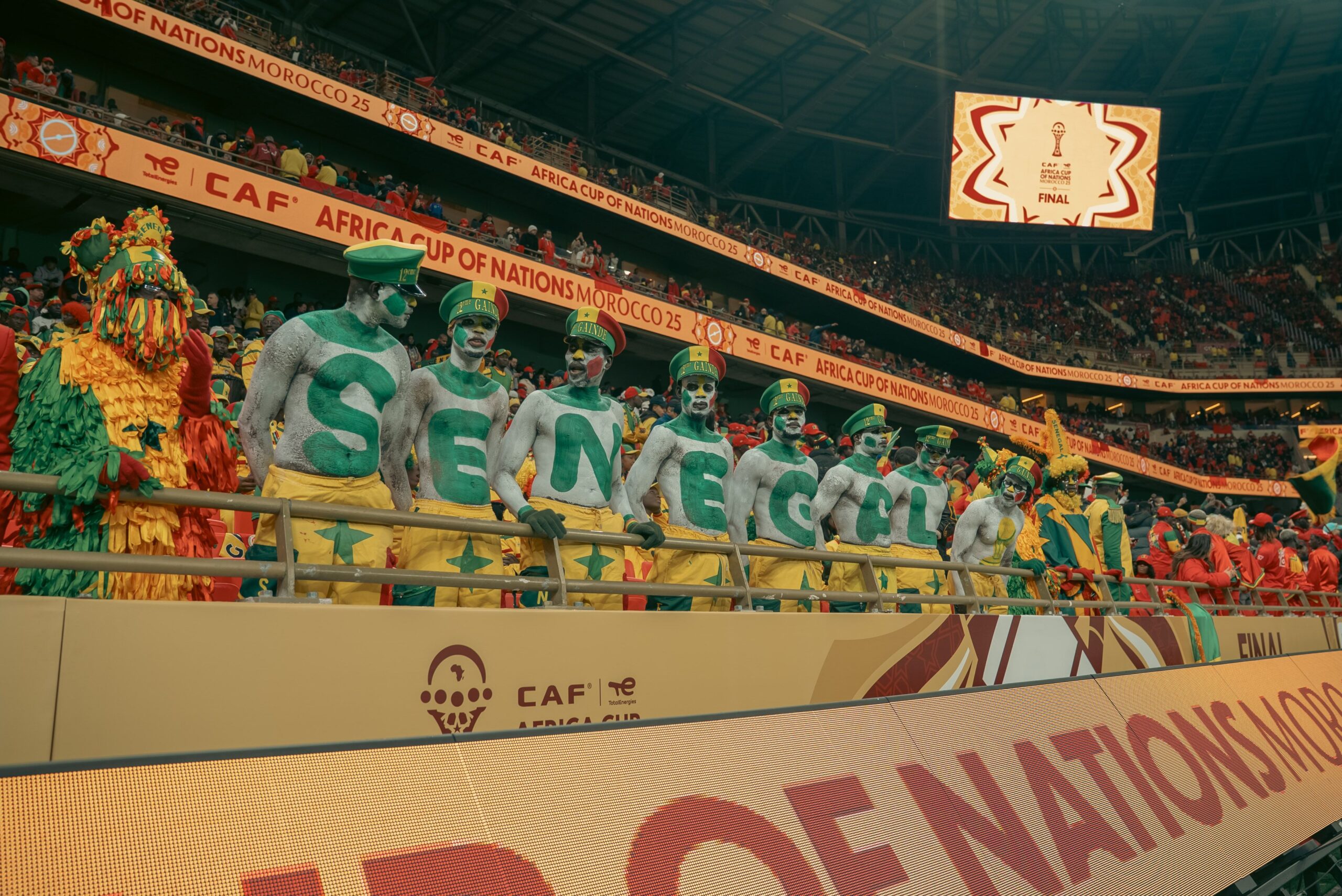
Senegal are officially Africa Cup of Nations champions once more after having their stripped title reinstated.
In January, Senegal won the title with a highly-contentious 1-0 victory over tournament hosts Morocco.
Pape Gueye was Senegal’s matchwinner with a stunning strike in extra-time, but that goal was overshadowed by chaotic events in normal time – which included the eventual winners walking off the pitch in protest at referee Jean-Jacques Ndala.
In light of those actions, the Confederation of African Football (CAF) overturned the result after an appeal board determined the Senegal team had forfeited the match when they left the field in protest – with Morocco being gifted a 3-0 win in March.
However, eight months on and Senegal have won their legal fight to be reinstated after the Court of Arbitration for Sport (CAS) ruled in their favour.
Court of Arbitration for Sport’s statement
CAS have overturned CAF’s verdict in March, based on Ndala’s decision to let the game resume after the protest.
‘The Court of Arbitration for Sport has delivered justice to sport,’ Senegalese Football Federation president Abdoulaye Fall said in a statement.
The legal battle may not be over yet after Morocco announced plans to appeal, likely to Switzerland’s supreme court, in a challenge to the integrity of a senior CAS judge.
Tournament regulations said a team which refuses to play should be considered to have lost the game, but CAS said those rules were meant only for cases ‘when a team’s conduct leads the referee to call off the game permanently’.
Ndala ‘did not err in law’ when he resumed the game and had ‘sole authority’ to make that call, CAS said, adding its three judges were unanimous.
‘The panel acknowledged that the referee had to make a decision in an atmosphere of extreme tension,’ CAS said. ‘However, these circumstances do not justify describing the decision as `arbitrary.´ On the contrary, the referee´s judgment did not appear to have been affected by factors external to the game.’
Morocco’s soccer federation detailed plans for an appeal that targets one of the three judges on the CAS panel.
In a statement, the Moroccan federation protested what it described as the court´s failure to address potential integrity concerns, alleging ‘confirmed communication’ between German arbitrator Ulrich Haas and Fall, the Senegalese soccer president, 48 hours before the decision was issued.
The CAS director general, Matthieu Reeb, acknowledged to reporters at the court in Lausanne that a Moroccan protest was received just minutes before the verdict was announced.
Reeb said the court’s panel ‘in charge of petitions for challenge has conceded that there was not enough elements at this stage to postpone the notification of the award’.
CAS verdicts can be challenged at Switzerland´s supreme court, also in Lausanne, though only on limited procedural grounds of which a judge’s integrity could be one.
What happened in the AFCON final?
The first controversial incident in second-half stoppage time came when Senegal were denied a goal when Crystal Palace forward Ismaila Sarr headed home.
Sarr thought he won it when he was the quickest to react off Abdoulaye Seck’s initial header which came back off the crossbar.
However, Ndala had already blown his whistle, awarding a very soft foul for contact between Seck and Morocco captain Achraf Hakimi.
That decision incensed Senegal and their mood worsened when Ndala awarded Morocco a soft penalty in the dying embers of stoppage time.
Ndala was advised by VAR to check a tug by West Ham defender El Hadji Malick Diouf on Brahim Diaz from a corner, with the Congolese deciding to award the spot kick.
This sparked scenes rarely seen before as Senegal’s fierce complaints then saw their whole squad storm on to the pitch – something that was matched by Morocco.
Senegal manager Pape Thiaw got into it with Morocco counterpart Walid Regragui before instructing his players to walk off the pitch, which they duly did.
Eventually, Diaz stepped up to take the kick, 17 minutes after it was awarded.
With the weight of the country on his shoulders, he inexplicably decided to try and chip the penalty down the middle of the goal – which Senegal goalkeeper Edouard Mendy caught.
CLICK HERE to follow TIBS News across socials